
Different brains, powerful minds: Women with ADHD
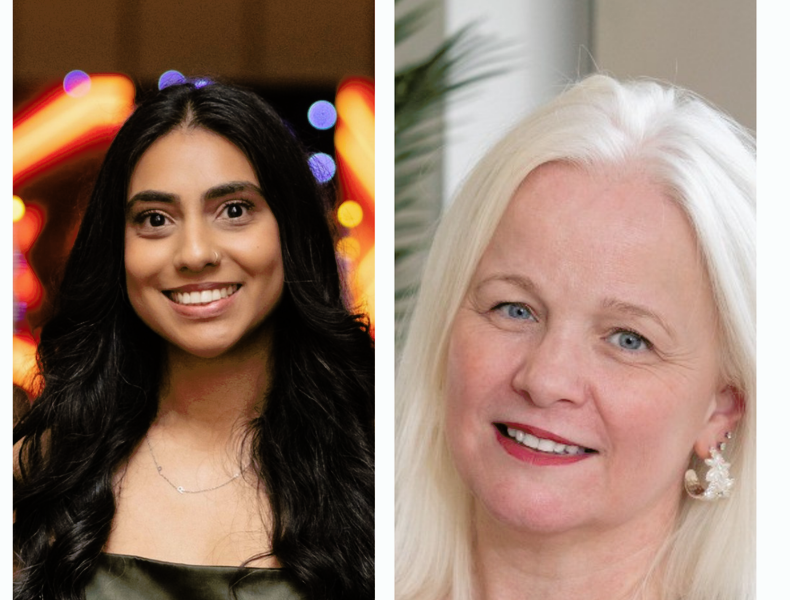
Written by Prabjot Ragbotra, Sales and Events Manager and Sian Timmins, Corporate Partnerships Fundraising Manager
Was I enough, or was I going to be too much? That’s what ran through my mind when I was asked to speak on a panel about women with ADHD at the IWD Conference.
Diagnosed at 45, and as a mother to two autistic daughters, neurodiversity in women and girls is very personal to me. What struck me immediately was the audience, so many women, all wanting to hear our experiences and, perhaps, to feel less alone.
I shared my diagnosis journey, navigating the NHS Right to Choose pathway due to long waiting times, and reflected on the challenges I’d faced earlier in my career. I’m not sure I’m fully at peace with my diagnosis yet, but I’ve started to lean into the strengths ADHD brings.
As a corporate fundraiser at Acorns Children’s Hospice, I’m privileged to tell the stories of the children and families we support. The passion that once felt like “too much” now helps shine a light on the specialist care we provide, and I’m proud of that.
What stayed with me most, however, was how many women spoke to me afterwards about struggling at work. They didn’t know what to ask for or how to access the support available. Despite reasonable adjustments, they feared being judged.
I am fortunate in that Acorns offered me support before I had even joined, simply by asking, “What do you need? How can we support you?” Neurodivergent employees bring strengths, innovation, creativity, hyperfocus and pattern recognition, yet so many still feel the need to hide who they are.
That’s what I found most frustrating. When organisations truly embrace neurodiversity, they don’t just support individuals, they build stronger, more inclusive teams.
Clearly, there’s still more to do than simply ticking a box.
ADHD in women is often overlooked, with many experiencing late diagnosis, masking behaviours, or quietly struggling to fit into environments that do not reflect how they work best.
My own journey to an ADHD diagnosis was not straightforward. I was initially diagnosed with autism, and it was at the end of that assessment that I was asked if I had ever considered ADHD, something that had never crossed my mind before.
I had to advocate for myself through the Right to Choose pathway, pushing for answers in a system that can feel difficult to navigate, especially as a South Asian woman.
ADHD does not always look how people expect. In professional environments it can show up as overcompensating, people pleasing, or constantly pushing yourself to keep up.
On the surface it can look like everything is under control, but in reality, it can be exhausting to maintain. At the same time, many of the traits that come with ADHD are the very things that make people thrive.
Thinking quickly, adapting in the moment, building relationships and bringing energy into a space are all real strengths.