Firms warn of rising costs and disruption from Iran crisis – Chambers

Three-quarters of West Midlands businesses report an existing or expected impact from the Iran conflict, according to new research from the region’s three Chambers of Commerce.
Increased fuel prices and shipping costs, rising prices from suppliers and customer delivery delays were most frequently cited in the data gathered by the Greater Birmingham, Black Country and Coventry & Warwickshire Chambers of Commerce.
More than 120 businesses from the West Midlands Combined Authority area took part in the online research, which was part of a national British Chambers of Commerce survey.
Of the West Midlands firms surveyed, 49 per cent said they are already impacted by the unrest in the Middle East, while 26 per cent expect to be in the future.
The most impacted sectors were manufacturing and production (23 per cent); hospitality, catering and tourism (11 per cent); admin, support and consulting (11 per cent); and retail and wholesale (7 per cent).
The majority of organisations expect their energy bills to increase in the next year - with 43 per cent anticipating rises of more than 20 per cent.
Thirty per cent expect it to be “fairly difficult” to pay their bills.
One SME wholesale business said: “We are experiencing fuel surcharges on seas freight containers and UK haulage [and] material cost increases in the Far East and India.”
A micro hospitality firm said: “We work with long haul flights and holidays. The war has left clients in an unsure situation, where they do not want to travel because of uncertainty.
“Repatriation admin costs are borne by the company, refunds are processed, so there is a loss of profits.”
Meanwhile, consulting firms and other service-based organisations described cancelling or postponing overseas training courses, interruptions to ongoing projects, and increasing difficulty completing business transactions.
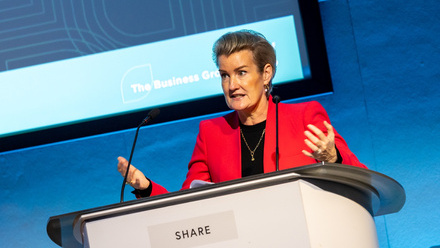
Henrietta Brealey (pictured), chief executive of Greater Birmingham Chambers of Commerce, said: “The results of this survey demonstrate how quickly global events can create challenges for businesses closer to home.
“Firms across Greater Birmingham and the wider West Midlands are telling us that rising fuel costs, supply chain disruption and ongoing uncertainty are already having a tangible impact on their operations.
“While businesses are resilient, many are facing difficult decisions as costs continue to increase.
“These findings reinforce the need for policymakers to recognise the pressures firms are under and provide the stability and support needed to sustain growth and investment across our region.”
Sarah Moorhouse, chief executive of Black Country Chamber of Commerce, said businesses across Wolverhampton, Dudley, Sandwell and Walsall, were being hit from every direction.
“We have members forecasting energy bill increases of 77 per cent this year, others facing half a million pounds in additional costs on top of escalating logistics charges” she said.
“The conflict is piling pressure on businesses that were already struggling. The findings reflect the reality facing businesses across the region where Black Country manufacturers, retailers and service firms alike are reporting rising costs, supply chain disruption and growing uncertainty.
"Our members are asking for help with fuel and energy costs and to be kept informed - that is not a lot to ask when you are fighting to keep your doors open."
Corin Crane, group chief executive, Coventry & Warwickshire Chamber of Commerce, said: “This survey shows that businesses across Coventry, Warwickshire and the wider West Midlands, are already feeling the effects of the conflict in Iran, with rising fuel, energy and transport costs placing additional pressure on firms that are already operating in a challenging economic environment.
“Nearly half of businesses told us they have been directly impacted, while many more expect disruption in the months ahead.
“The findings underline the need for government to provide practical support on energy and operating costs, while ensuring businesses receive clear and timely information to help them plan with confidence during a period of continued uncertainty.”