
Forensic linguists from Aston University join Vicky McClure and Jonny Owen for Sky History series
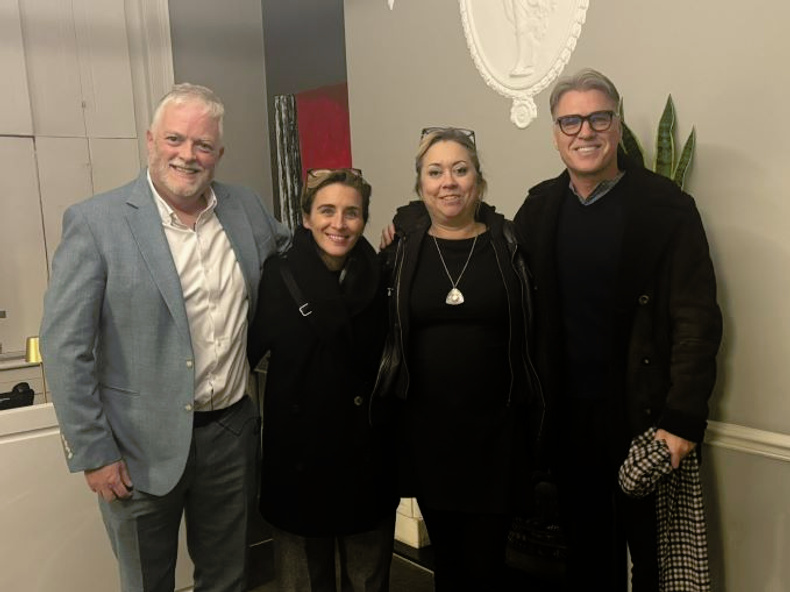
Two academics from the Aston Institute for Forensic Linguistics (AIFL) are featuring in a new Sky History crime series starring Vicky McClure looking at unsolved murders and miscarriages of justice.
The unique historical crime series is called Britain’s Murder Map with Vicky McClure and Jonny Owen, and it charts the journey of the married couple travelling across the UK exploring historic, culturally significant crimes that have changed the face of modern Britain.
Speaking to experts, historians, police officers and victims’ families, the series examines the lasting impact each murder has left on the community and why these cases still resonate today.
Professor Tim Grant and Dr Nicci MacLeod from Aston University feature in the episode called '10 Rillington Place' which will be broadcast on Sky History tonight at 9pm.
The episode explores the case of British serial killer John Christie who committed many of his crimes in his London house and the miscarriage of justice involving his neighbour Timothy Evans.
This programme takes an in-depth look at Timothy Evans who, on 9 March 1950, was hanged after confessing to the murder of his wife, Beryl and baby daughter, Geraldine.
However, 18 years after Evans’ death, linguist Jan Svartvik authored a publication calling the validity of Evans’ confession into question, and in doing so, coined the term ‘forensic linguistics’ – now an established academic discipline whose global hub is based at Aston University.
Professor Grant said: “It was a pleasure to be involved in the new series with Vicky and Jonny, and the case of Timothy Evans is incredibly significant because the details surrounding the confession, gave rise to forensic linguistics all those years ago.
“We know from these historical cases and from our contemporary work as expert witnesses that language analysis can play a huge part in determining innocence or guilt and help improve the delivery of justice.”
Dr MacLeod said: “This case remains one of the most notorious in British history for being a clear miscarriage of justice with a tragic ending.
“We’re sure viewers will find it compelling to see how this case unravelled, and how an understanding of language can be a crucial addition to the toolkit in terms of delivering justice – even when that justice is hugely delayed.
“From This is England to Line of Duty and Trigger Point, Vicky is obviously a true icon of British drama, so it was great to work with her and Jonny on this hugely important case.”
Series producer Melissa Mayne said: “We were delighted to include Dr MacLeod and Professor Grant in our programme having heard their important coverage of the Evans case in their Writing Wrongs podcast.
“Their explanation of Forensic Linguistics and how it proved Evans' innocence and also inspired an academic discipline - made for a valuable contribution to our programme.”
Professor Grant and Dr MacLeod were invited to take part in the TV show because the production team listened to their monthly podcast series – Writing Wrongs – the opening episode of which features the Timothy Evans case.
Writing Wrongs has also been shortlisted for a prestigious podcast award at the Crimecon UK True Crime awards.
Writing Wrongs from the Aston Institute for Forensic Linguistics is shortlisted in the Outstanding Indie Podcast category with the winners announced on the 4 June in London.
Professor Grant added: “Both Nicci and I are thrilled to have been shortlisted for this award because it was something which started as a labour of love for us and it has steadily grown into a hugely popular podcast series which has had more than 15,000 listens in about a year from across the world.
“We’re always grateful for the support of our listeners – dubbed the ‘Wrong Uns’ – who continue to listen and download the show on all major platforms.
“We’re already well into the recording of season three and we’re once again discussing some incredibly high-profile cases where forensic linguistics played a key role in the delivery of justice.”