Government backs business-led plan to tackle West Midlands skills gaps
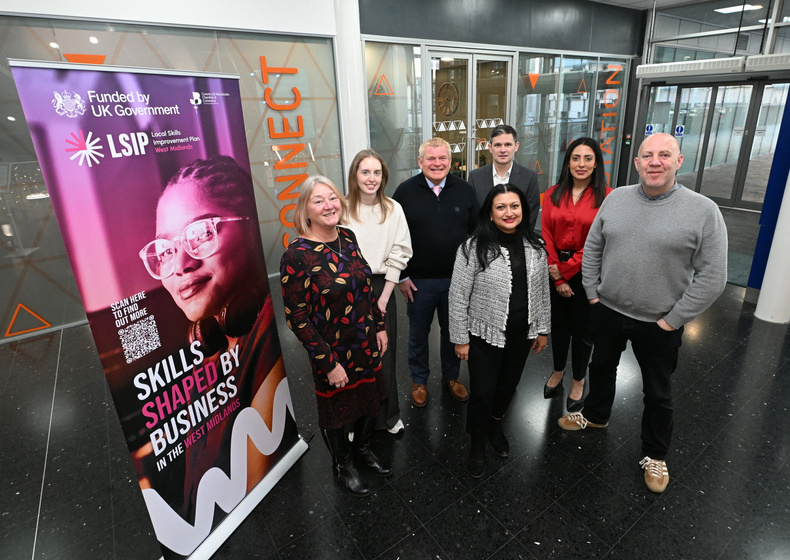
The Government has signed off a major new plan that will support businesses in the West Midlands with the skills they need to boost economic growth in the region.
The West Midlands Local Skills Improvement Plan (LSIP) has been written on the back of months of consultation with more than 1,000 employers, educators and regional stakeholders across the West Midlands to understand what skills are required for growth and where there are gaps in training provision.
In the West Midlands, the LSIP has been led by Coventry and Warwickshire Chamber of Commerce and is being supported by Greater Birmingham Chambers of Commerce, Black Country Chamber of Commerce and West Midlands Combined Authority (WMCA).
The new plan links directly to the Mayor’s West Midlands Growth Plan and will act as a ‘catalyst and enabler’ for the region’s economic transformation.
Through a series of surveys, events and one-to-one conversations with businesses, the LSIP sets out six priorities that will support the skills system.
They include making it easier for firms to navigate and access the skills system after feedback that the current provision is too complex and it’s not always clear where to go or who to talk to. One respondent described the current landscape as ‘overwhelming’.
The second priority is an increase in modularisation – so short, bite-sized courses that fit into working patterns and are designed around real working practices within businesses.
Next, the new plan recommends an increase in work-readiness and foundation skills to help people get into work and be ready to perform effectively from day one. The gap in this area varies from sector to sector but is recognised as crucial for the growth of the whole economy.
A shortage in leadership and management skills was identified as holding back growth and, once again, enhancing flexibility and easier-to-navigate systems have been included in the plan.
The final two priorities identify specific issues around embedding digital, data and AI skills into training provision as well as green and sustainability skills.
Each priority area has been matched with fresh solutions for specific areas of the economy that include advanced manufacturing; clean tech; defence; business, professional and financial services; creative; digital; everyday economy; and health & social care; as well as apprenticeships more generally.
Richard Parker, mayor of the West Midlands, said: “Businesses tell me one of the biggest challenges they face is finding enough people with the right skills, especially in fast-growing industries like construction, advanced manufacturing, green and medical tech.
“I’m committed to plugging that skills gap so we can accelerate growth. The recommendations in this report will help us do that by deepening our understanding of what employers need most and informing our decisions about what skills and training to invest in.
“That directly supports a key priority of my Growth Plan - creating the skilled workforce that businesses require to drive investment and create the high-quality jobs of the future.”
Corin Crane, chief executive of the Coventry and Warwickshire Chamber of Commerce, said: “Our team has spent months talking to businesses and organisations about skills shortages that are holding back growth, where they feel training provision is lacking and, crucially, the solutions they wanted to see.
“This second Local Skills Improvement Plan for the region has put the future of skills and training in the hands of local employers by listening to their needs and identifying actions that will help them to ensure their staff have the skills to meet today’s challenges and those to come.
“We are thrilled that this plan has now received sign off from Government and that we can now start to put the plan into practice to help the regional economy to grow faster and more sustainably.”
Henrietta Brealey, chief executive at Greater Birmingham Chambers of Commerce, said: “We are proud to playing our part in bringing businesses and education together to make sure skills training matches real job opportunities.
“This plan has been shaped by the collective expertise of employers, educators and partners from across the West Midlands. I’d like to thank everyone who contributed their time, insight and ambition to this work.
“Skills drive opportunity, productivity and growth. By listening to employers and working together across the region, we can equip people with the skills businesses need, build stronger pathways into work, and help more local residents access meaningful, rewarding careers. This plan is ultimately about unlocking potential, strengthening our economy and ensuring a bright future for the West Midlands.”
Sarah Moorhouse, CEO of Black Country Chamber of Commerce, added: “When we talk to our members about growth, the one thing that always come up in conversation is skills and having access to training that really makes a difference to them.
“In our region, there is a real appetite for advanced manufacturing skills and developing the leaders and managers of the future and this will be reflected in the Local Skills Improvement Plan. Putting what business needs at the forefront of the approach will ensure we are equipping firms with the tools they need to be competitive on a national and global scale.”
Phil Smith, chair of Skills England, said: “The Local Skills Improvement Plans give areas a clear roadmap that will help create better skills for better jobs all across the country.
“These LSIPs, alongside the emerging sector jobs plans and the other stakeholder dialogues we are having, is helping us build a much better picture of the skills needs throughout the nation.
“Skills England is excited to play a key role in that journey, so that employers and learners can benefit in local communities.”
Jacqui Smith, Minister for Skills, said: “For too long too many people have been locked out of opportunity, and businesses have struggled to recruit the skilled staff they need to build their workforce.
“Local leaders have a unique insight into the skills needs and opportunities in their area, which is why we are putting them in the driving seat to support their community.
“Our reforms, including to the Growth and Skills Levy and the Youth Guarantee, will build a workforce prepared for the demands of today as well as the jobs of tomorrow."