
Human-in-the-loop: Building trust in AI through human expertise
Written by Vahid Mohammadi, CEO and Founder of Universitio LTD
Artificial Intelligence has become an integral part of everyday life in recent years. From answering simple questions to helping users choose universities, plan travel, or understand complex topics, AI systems are increasingly becoming the first point of reference for decision-making.
However, most users interact with these systems in a very simple way. They ask a question and expect a direct answer. In many cases, because of the confident and fluent tone of AI responses, the answer is accepted as truth without further validation.
This creates an important challenge: despite the power of artificial intelligence, not all types of information carry the same level of reliability, and not all decisions require the same level of context, expertise, or caution.
This article is written from an end-user perspective rather than a technical or engineering viewpoint. The goal is not to explore how AI models are built or trained, but to examine how people actually use these systems in real life, and where human expertise becomes essential in strengthening trust.
It is important to emphasise that this is not an argument against general-purpose AI systems. Large language models already provide significant value in education, productivity, and access to information. For many general questions, they are fast, useful, and remarkably effective.
However, the complexity increases when these tools are used for decisions that require up-to-date knowledge, contextual understanding, and domain-specific expertise.
AI literacy: A critical emerging challenge
This discussion ultimately points to one of the most important challenges in today’s digital society: AI literacy.
AI literacy is no longer just about understanding that AI exists. It is about understanding when to trust it, when to question it, and when human expertise must remain part of the decision-making process.
Without this awareness, users may unknowingly over-rely on systems that are not designed to guarantee truth in every context.
When information is not equal
Not all information behaves in the same way. Some types of knowledge are relatively stable:
- Basic mathematical principles
- Established scientific facts
- General conceptual knowledge
These are areas where AI systems typically perform well and can be considered highly reliable.
However, there is another category of information that is constantly changing or heavily context-dependent:
- Immigration and visa regulations
- University admissions requirements
- Financial thresholds and funding rules
- Service quality and reviews
- Hospitality and travel-related information
In these cases, the issue is not simply whether the AI is “right” or “wrong”. The challenge is that the information itself evolves, varies across sources, and depends heavily on context.
Confident hallucination: The most misleading strength of AI
One of the most critical risks in modern AI systems is what can be described as confident hallucination.
The greatest strength of large language models is also what makes them risky: their fluent, confident, and human-like tone. These systems are designed to predict the next best word, not to verify truth in the way a human expert would.
When an AI system presents incorrect information with complete confidence, most users—especially non-technical users—have no immediate way to detect the error.
This makes the warning raised in this article particularly important: trust must not be based solely on fluency or confidence of output.
Context validity: Time, place, and personal conditions
Information in real-world domains is rarely universal.
Topics such as immigration law, admission policies, or travel regulations are not only time-sensitive but also dependent on geography and individual circumstances.
A small change in a visa rule or university policy can completely change the outcome for an applicant.
This introduces the concept of context validity—the idea that information is only meaningful when time, place, and personal conditions are correctly considered.
General-purpose AI systems often struggle with these subtle but critical distinctions, especially when information changes faster than model updates.
Where this becomes critical: Real-world decision-making
The issue becomes significantly more important when AI is used to support real-life decisions.
For example:
- A student may rely on AI for university admission guidance
- Another person may use it for visa or immigration advice
- Others may depend on it for comparing services, such as accommodation or travel options
- Financial planning decisions may also be influenced by AI-generated responses
In all of these cases, the output is not just information—it becomes part of a real decision with financial, personal, or long-term consequences.
This is where the gap between “useful answer” and “reliable decision support” becomes critical.
Human-in-the-Loop: A trust framework
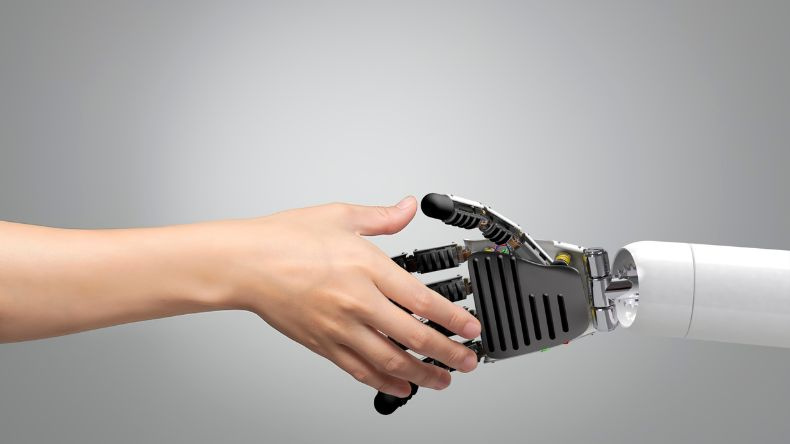
Human-in-the-Loop (HITL) refers to the integration of human expertise into the AI decision-making process.
In simple terms:
AI does not operate alone; humans remain part of the system.
In this model:
- AI generates information quickly
- Human experts review, refine, and contextualise outputs
- The final result becomes more reliable and grounded in reality
The goal is not to slow down AI systems, but to make them more trustworthy in situations where accuracy matters most.
Why human expertise matters
Human involvement in AI systems adds several critical capabilities.
1 Reducing AI errors (Hallucinations)
AI systems may produce confident but incorrect outputs, especially when information is incomplete, outdated, or ambiguous. Human experts can identify and correct these issues.
2 Contextual understanding
Many questions require more than factual answers. They depend on intent, cultural background, or individual circumstances. Humans interpret meaning beyond raw data.
3 Decision-making under uncertainty
When information is incomplete or conflicting, human judgment helps guide more reliable outcomes based on experience and reasoning.
4 Accountability (Missing but critical layer)
A key dimension often overlooked is accountability.
If an AI system provides incorrect visa advice that leads to rejection, there is no direct legal or responsible entity to hold accountable in the same way as a human consultant or advisor.
This is where human involvement becomes essential—not only for accuracy, but also as a responsible decision-making anchor.
A simple real-world analogy: Healthcare
A clear example of this hybrid model already exists in healthcare.
A doctor can use AI systems to analyse thousands of medical records in seconds (speed and scale), but the final diagnosis and treatment decisions remain the responsibility of the medical professional.
Here, AI supports decision-making, but human expertise ensures safety, ethics, and accountability.
Beyond general AI: The shift toward specialised systems
This discussion is not intended as a criticism of general-purpose AI systems. These tools are extremely valuable and will continue to play a major role in how people access and process information.
However, it is becoming increasingly clear that different types of problems require different levels of reliability and expertise.
As a result, the future of AI is likely to move towards more specialised systems, where:
- Domain experts contribute directly to model training and evaluation
- Human feedback continuously improves system performance
- Outputs are better aligned with real-world domain requirements
In these systems, AI is not replacing human expertise; it is extending it.
Conclusion
Human-in-the-Loop is more than a technical concept—it is a trust framework from the perspective of the end user.
As AI becomes a primary source of information in everyday life, the key question is no longer simply whether AI can provide answers, but whether those answers can be trusted in the right context.
The most effective systems will not be those that rely solely on artificial intelligence or solely on human expertise, but those that combine both. AI provides speed and scalability, while human expertise ensures context, judgment, and accountability.
Together, they create a more reliable foundation for decision-making—particularly in areas such as education, immigration, healthcare, and services where real-world consequences are significant.