Iran conflict dampens business optimism in Q1 – Chamber report

The escalation of the Iran war has tempered an optimistic start to the year for Greater Birmingham businesses, a new economic survey reveals.
According to Greater Birmingham Chambers of Commerce’s Q1 Quarterly Business Report, firms began the year positively with an uptick in advance bookings domestically and abroad, recruitment activity picking up and positive signs around training and investment.
However, the conflict in the Middle East has thrown plans into disarray due to rapidly rising fuel and utility costs, as well as freight delays and significant increases in transport and carriage costs.
At the time of surveying for the Q1 report, less than 9 per cent of businesses reported pressure to put up prices as a result of rising fuel costs – but this is expected to increase sharply in Q2 due to the impact of the war.
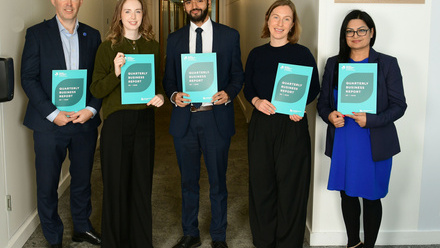
Raj Kandola (pictured), deputy CEO at Greater Birmingham Chambers of Commerce, said: “At the time of surveying for this report, between 9 February and 9 March, less than 9 per cent of Greater Birmingham businesses reported pressure to raise prices because of increasing fuel costs.
“Since then, the UK has seen rapidly rising fuel and utility costs, and anecdotally, our members are reporting freight delays as cargo is rerouted and significant increases in transport and carriage costs.
“The war between the US and Iran has also severely disrupted global fertiliser supplies, causing prices of key nutrients to spike significantly, threatening global food security and significant increases to food price inflation.
“Greater Birmingham businesses are resilient. Nevertheless, the economic turbulence of the last few years has eroded the capacity of many businesses to absorb these kinds of additional costs – particularly alongside domestic pressures such as changes to employment rights and increases to the National Living Wage.”
The report reveals more than half of firms (51 per cent) attempted to recruit staff in the first quarter of 2026 – the highest figure since mid-2025.
Of those hiring, 59 per cent said they struggled to fill vacancies, although that was down sharply from the previous quarter.
Manufacturers remain under the greatest strain, with 71 per cent trying to recruit and 84 per cent reporting problems finding suitable candidates, particularly for skilled manual and technical roles.
There was some brighter news on future jobs prospects, with 34 per cent of firms expecting employee numbers to rise over the next three months.
Overall workforce confidence also improved, with firms more optimistic about hiring in the months ahead.
However, rising costs continue to bite. Almost a third of businesses (32 per cent) said labour costs were forcing them to consider price rises, making wages the single biggest pressure on firms.
Corporate taxation was the biggest outside concern, cited by 26 per cent of respondents, while worries over business rates and competition also climbed.
Domestic demand remains patchy. The balance score for UK sales slipped to 56 – the fifth consecutive quarterly fall – although advance bookings improved to 57, suggesting some firms have stronger pipelines heading into spring.
Exports offered more encouragement, with the balance score for overseas sales rising to 55 – the strongest level since the first quarter of 2025.
Manufacturing exporters in particular enjoyed a strong quarter, with export sales jumping to 64 and half reporting increased advance bookings.
Cashflow remains a major concern, falling to 40 – the lowest level since late 2020 – underlining continued pressure on company finances.
The GBCC’s Quarterly Business Report – sponsored by Birmingham City University - provides a regular snapshot of the performance of the business community.
It is the most comprehensive, regular report of its kind in the city-region.
Heike Schuster-James, associate director of business development at Birmingham City University, said: “Labour market conditions in Q1 2026 highlight growing demand alongside persistent skills challenges.
“While 25 per cent of businesses reported workforce growth, 34 per cent expect employee numbers to increase over the next three months, and 51 per cent are currently recruiting.
“However, skills shortages continue to constrain hiring across sectors. This is particularly evident in manufacturing, where demand is stronger, with 42 per cent of firms expecting workforce growth over the next quarter and 71 per cent actively recruiting.
“However, 84 per cent report recruitment difficulties, particularly in full-time skilled manual and technical roles.
“Encouragingly, investment in skills is increasing, with 25 per cent of manufacturing businesses reporting higher training budgets (up from 11 per cent in Q4 2025) reinforcing the need for targeted workforce development.”
A launch event for the Q1 Quarterly Business Report – focusing on investment trends in Greater Birmingham – takes place at Birmingham City University’s Curzon Building on Wednesday 29 April (9am to 11am).