New industry partnership on inclusive cognition research for people with intellectual disabilities
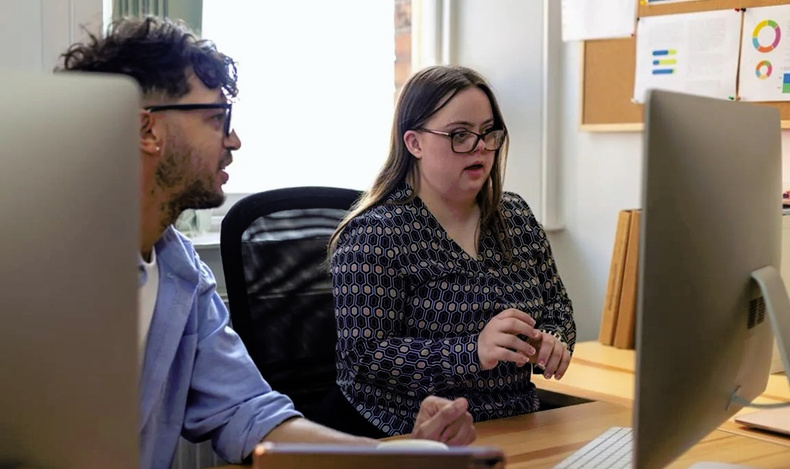
People with intellectual disabilities will sit at the heart of a new research partnership between universities and industry that will develop new, more inclusive assessments for a wider spectrum of cognitive abilities.
The collaboration is known as the Behavioural Research in Intellectual Disability Development and Growth Evaluation (BRIDGE) project.
BRIDGE brings the University of Birmingham, the University of Warwick and global industry leader Shionogi together to develop inclusive and accessible measures of cognitive executive functions specifically for people with intellectual disabilities.
People with intellectual disabilities that co-occur with rare genetic conditions or autism are often excluded from traditional research, heightening inequalities. In the UK alone, over 1.5 million people have an intellectual disability, yet 94 per cent of autism studies lack sufficient representation from this group.
Current cognitive assessments are rarely suitable and accessible for people with a mental age under five years.
To address this gap, BRIDGE will create and test new measurement tools appropriate to a broader spectrum of cognitive abilities.
Professor Caroline Richards, Professor of Neurodevelopmental Conditions at the University of Birmingham and Principal Investigator of BRIDGE, said: “This partnership is facilitating a significant step toward more inclusive, rigorous and accessible assessments of cognition for people with intellectual disabilities, that can be readily translated into clinical and educational practice.”
In a major step forward for neurodevelopmental research and practice, involvement from people with intellectual disabilities and their families is woven into every part of the project, to ensure that the measures developed will be useful for families, clinicians and academics.
The final measurement tools will be available freely to anyone, with the aim of not needing to rely on specific language or cultural abilities.
Robust data underpinning the use of these tools will be shared widely with the public as well as researchers and clinicians, to foster a deeper understanding of cognitive assessment and its role in improving care and outcomes for those with intellectual disabilities.
Andrew Cooper, vice president, Global Head of Epidemiology and Real-World Evidence, at Shionogi & Co Ltd. said: “This collaboration is designed for the long-term, with people with intellectual disabilities at the heart.
“We share the ambition of Caroline, Rory, Hayley and the team to lead the way in inclusive research that will make a significant difference to people’s quality of life.”
Shionogi’s investment into the BRIDGE project builds on the research expertise of Professor Caroline Richards (Principal Investigator), Dr Rory Devine, Associate Professor, and University of Warwick’s Dr Hayley Crawford. Dr Crawford and Professor Richards also lead the Cerebra Network, which collaborates on aspects of the BRIDGE project.
The BRIDGE project is also growing research capacity and leadership in this clinically important and often under-resourced area, with six research staff, and three PhD researchers forming part of the project team, alongside opportunities for research assistants and placements for students.
Dr Hayley Crawford, Associate Professor at University of Warwick said: “The BRIDGE project is built on an exciting collaboration of academic experts, industry experts and, crucially, families who are experts by experience. With this blend of perspectives, we can progress research that will truly meet the needs of people with intellectual disability.”
Following a presentation by the BRIDGE team at the Gatlinburg Conference on Research and Theory in Intellectual and Developmental Disabilities, they are now focused on the next phase of the project.
This will take an inclusive approach to developing a new, brief questionnaire measure of everyday functioning and refining novel, play-based assessments with families and parents to capture the strengths of people with disabilities and enable the use of these assessments at home.