Recruitment pressures ease but global uncertainty hits exports – Chamber report

Recruitment challenges facing Greater Birmingham businesses have eased to their lowest level since summer 2021, according to a major new economic report.
Greater Birmingham Chambers of Commerce’s latest Quarterly Business Report reveals that 52 per cent of firms attempted to recruit during Q2 of 2026.
Of those hiring, 53 per cent reported difficulties finding suitable candidates – down from 59 per cent in the previous quarter and the lowest figure recorded since Q2 2021.
The report, sponsored by Birmingham City University, also points to improving domestic demand and business confidence, with 40 per cent of firms reporting increased UK sales, up from 34 per cent in Q1.
However, export activity weakened sharply during the quarter, with overseas sales and advance bookings falling to their lowest levels since Q3 2025.
The overall export sales balance dropped four points to 51, while export orders fell seven points to 48, returning to negative territory.
The decline was particularly pronounced in the services sector, where export sales fell to their weakest levels since Q3 2020.
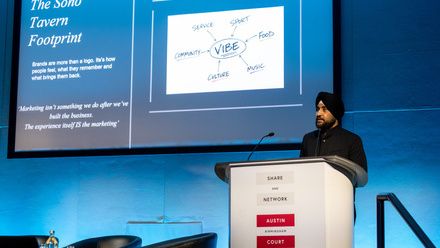
Raj Kandola (pictured), deputy chief executive of Greater Birmingham Chambers of Commerce, said: “The latest results from our Quarterly Business Report reiterate cautious optimism and highlight the underlying resilience of our business community, with growth in domestic demand, an easing of recruitment difficulties, increases in cashflow, and the highest business confidence outlook since Q1 2025.
“However, this quarter is also beginning to show the impact of the US-Iran conflict, with export sales and international advanced bookings significantly down.
“Businesses are also still facing significant cost pressures. Labour costs remain the most significant factor, with early signs that this is beginning to ease, but firms are also reporting concerns about the cost of utilities, and survey data shows that fuel costs have jumped eight points.”
The Q2 report shows confidence in turnover increased by four points to 73, while confidence in profitability rose by five points to 64.
Cashflow also improved, with the balance score rising five points to 45, although it remains in negative territory.
Despite this improving outlook, firms continued to hold back on investment. Investment in equipment fell three points to 44, while investment in training slipped two points to 49.
Manufacturers recorded a stronger quarter, with domestic sales rising 20 points to 70 and 55 per cent of manufacturing firms reporting increased sales.
However, price pressures remain high. Around 44 per cent of businesses expect to raise prices over the next three months, with labour costs, utilities and fuel among the main pressures.
Inflation remains the external factor most commonly cited by firms, rising from 20 per cent to 28 per cent.
Heike Schuster-James, associate director of business development at Birmingham City University, said: “Business performance across the West Midlands strengthened in Q2 2026, with 40 per cent of businesses reporting increased UK market sales, up from 34 per cent in Q1.
“Growth was driven largely by the manufacturing sector, where the proportion of businesses experiencing higher sales more than doubled from 25 per cent in Q1 to 55 per cent in Q2.
“These findings highlight the importance of continued investment in innovation, skills and business support across the region.
“Institutions such as Birmingham City University will play a key role in supporting business innovation, helping to connect research, skills and commercial opportunities across the region.”
The GBCC’s Quarterly Business Report provides a regular snapshot of business performance across Birmingham, Solihull, Sutton Coldfield, Lichfield and Tamworth, Cannock Chase and Burton-on-Trent.
A launch event for the Q2 report – with a theme of ‘Navigating Global Uncertainty, Seizing Local Opportunity’ is taking place at Birmingham City University’s Curzon Building on Tuesday 7 July (9am to 11am).