
Seeing is believing: Why great work should be shown, not just told
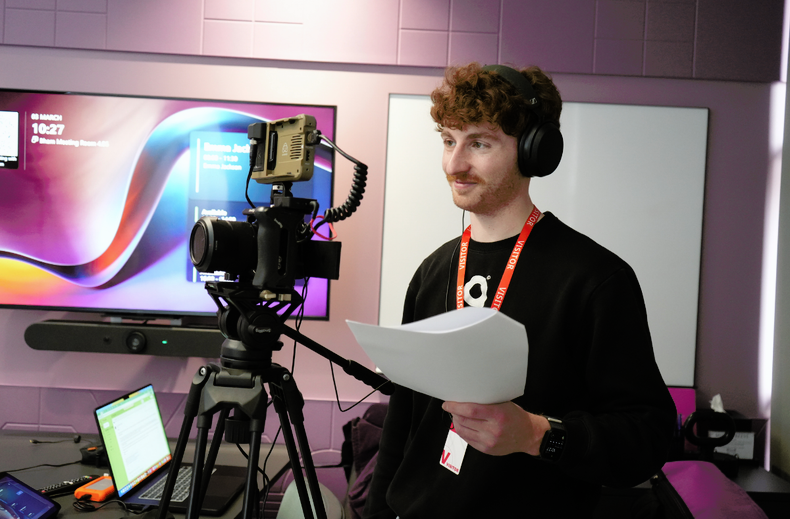
Written by Alexios Zachariades-Layland from Gumbudii
Video case studies are not new.
Most businesses have seen them before, and many already understand their value in theory. But in practice, they are still often treated as an optional extra rather than a useful part of the client delivery process.
That is where many businesses miss a trick.
If you are already doing great work for clients, it is worth thinking about how that work can continue creating value after the project has ended. A video case study can help turn one successful piece of work into something that supports future sales, stronger marketing, and greater trust with potential clients.
Put simply, it is one of the most practical ways to use great work to get more work.
Why video case studies still matter
Written case studies still have a place. They can be detailed, informative, and useful for people who want to read more deeply into a project.
But video adds something different.
It gives people a quicker, more accessible way to understand the story behind the work. Instead of reading a long summary, they can hear directly from the client, see the outcome, and get a feel for the quality and professionalism behind the project.
That matters because potential clients are often short on time. If they are comparing suppliers, reviewing proposals, or browsing a website between meetings, a short, well-structured case study video can help your business make a stronger impression much faster than a PDF attachment or a long block of copy.
It also helps your business feel more human. People are not only buying a service. They are buying confidence in the people delivering it.
The real opportunity: Building case studies into the process
The most useful shift a business can make is to stop thinking about case studies at the very end of a project.
Instead, ask this earlier on:
If this project goes well, how are we going to capture it properly?
That one question changes the approach entirely.
Rather than scrambling for a testimonial after delivery or deciding later whether there is budget left to document the work, you can plan ahead. You can identify what success will look like, what footage or interviews might be useful, and how the final story could support the business afterwards.
This also makes the financial side more sensible.
A video case study should not always be seen as an awkward add-on cost at the end. In many cases, it makes more sense to factor it into the overall scope and pricing of the project from the start.
That way, the work is covered, the value is clear, and you walk away with more than just the main deliverable. You also leave with a useful asset that can support future growth.
Where video case studies can be used
One of the best things about a case study video is that it does not need to live in just one place. Once created, it can support multiple parts of the business.
1 Sales follow-ups
This is one of the most effective uses.
After speaking with a warm lead, sending over a relevant case study video can help reinforce credibility far better than simply saying you have done similar work before. It gives the potential client something clear and memorable to engage with.
2 Proposals and pitch documents
A proposal becomes much stronger when supported by real examples. A short case study video can help a prospect quickly understand the standard of work, the process, and the type of result you can deliver.
3 Newsletters and email marketing
A lot of business newsletters are text-heavy and easy to skim past. A video case study can make that content more engaging and help readers connect with a client success story far more quickly.
4 LinkedIn
LinkedIn is a strong home for this kind of content, particularly for b2b businesses. A case study video can show credibility, demonstrate results, and give your audience a practical example of how your business solves problems.
5 Your website
A well-placed case study video can do a lot of work on a website. It helps visitors understand what you do, shows what good outcomes look like, and adds proof in a format that is easy to absorb.
What makes a case study video useful
Not every video case study will have the same impact. The strongest ones usually have a few things in common.
They focus on a clear challenge
People need context. What problem was the client facing? What was the objective? Why did the project matter?
Without that, the result has less meaning.
They explain the approach properly
A lot of case studies become too vague. Saying a service was “tailored” or “collaborative” sounds fine, but it does not tell the viewer much. Be clear about what was done and why it worked.
They include the client’s voice
A client speaking honestly on camera is often the strongest part of the whole piece. It adds authenticity and helps build trust quickly.
They show outcomes clearly
Not every project needs dramatic numbers to be valuable. But the viewer should finish the video with a clear understanding of what changed and why the work mattered.
They stay focused
A case study does not need to include everything. It just needs to include the right things. In many cases, two or three minutes is enough to make a strong impression.
Helpful tips for planning a stronger case study
For businesses that want to use case study videos more effectively, a few simple habits can make a big difference.
First, identify likely case study opportunities in advance. If a project has a strong objective, visible outcome, or happy client, it may be worth planning to capture it from the beginning.
Second, ask better questions. Instead of only asking a client whether they enjoyed working with you, ask what challenge they were facing beforehand, what stood out during the process, and what changed afterwards. These answers are usually far more useful.
Third, think beyond a single final video. One case study can often be repurposed into a shorter LinkedIn edit, a website feature, a proposal link, a newsletter section, and several written pull quotes. That is where the return on the investment becomes much stronger.
Finally, keep it natural. The most effective case study videos usually do not feel overly scripted. Clear, honest reflections from real people tend to build the most trust.
Why this matters for growth
Many businesses work hard to win new clients while underusing one of the best assets they already have: proof of work they have completed successfully.
That proof should not disappear once the project is signed off.
When documented properly, a strong piece of work can keep helping the business long after delivery. It can support conversations, answer doubts, demonstrate quality, and help prospects picture what it might be like to work with you.
That is why video case studies are worth considering more seriously.
Not because they are new.
Not because they are trendy.
But because they are practical.
They help businesses present their work in a clearer, more engaging, and more persuasive way. And when built into the process and budget from the start, they can become a reliable part of how successful projects lead to future opportunities.
If your business is already doing work worth talking about, it may be worth asking how that work can also be captured in a way that helps open the next door.
Of course, if you would like to explore how to bring your next client case study to life, feel free to reach out to the team at Gumbudii.