
The different roles of AI search engines
Written by Michael Farr from mff marketing
2026 has seen the launch of another AI answer engine to rival OpenAI’s ChatGPT, Google’s Gemini and Perplexity. Yahoo Scout launched in January 2026, built on Yahoo’s unique data, user insight and 30 years of search experience.
And, with 37 per cent of searches now taking place on AI search engines, it’s no wonder Yahoo wanted a slice of the pie.
mff marketing asks, do we need another AI answer? And if so, why?
In short, yes. Despite several existing AI search engines, each one provides a different type of answer, based on different citations.
In the same way news was historically consumed via tabloid or broadsheet newspapers, AI search engines offer different style of answer, using different content. This means that different answer engines can be better suited to different different tasks.
Yahoo Scout stands out by leveraging its massive network, over 500 million user profiles, a knowledge graph of more than 1 billion entities, and 18 trillion annual consumer events. This depth of data allows Yahoo Scout to deliver more personal, context-rich, and trustworthy answers, grounded in decades of user behaviour and search expertise.
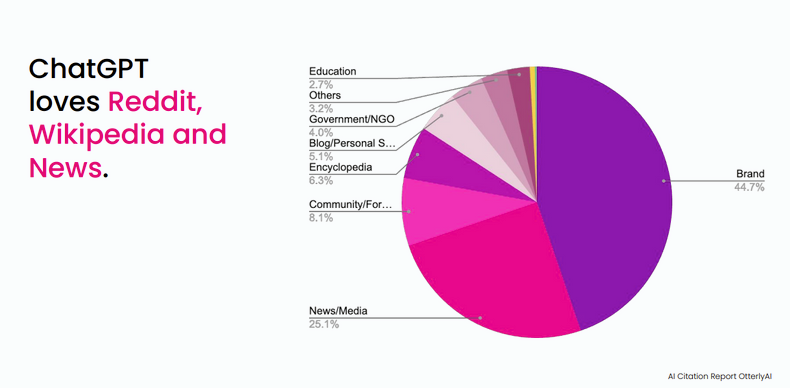
OtterlyAI, a partner of mff marketing, recently completed a citation analysis report analysing 1M+ prompts (searches) across AI Search engines and found some big differences between the citations used.
ChatGPT was found to use Reddit and Wikipedia to answer user queries, whereas in contrast Google Gemini, was more focussed on branded & news content.
What does this mean for users?
As a user of AI search engines, this means we need to consider which platform will best fit with our request and expected answer. For example, a more generic question requiring sentiment and understanding social proof, such as researching a product to buy, may be best achieved via Open AI’s ChatGPT as it uses a lot of third party content to answer a question.
In contrast, a research heavy project may be better suited to Google’s Gemini given the brand and news content it cites within answers.
What does this mean for brands that want to show up in AI Search results?
For businesses, the rise of AI Search engines like Yahoo Scout means that traditional SEO is no longer enough. Search marketing strategies must now account for how AI engines interpret, summarise, and present content. This is where AEO and GEO come into play.
For brands wanting to appear in AI engine answers, it is key for them to understand the current citations/information used by each engine when providing an answer and ensure they have strong content in this channel to increase their visibility. Some quick wins:
- Step 1: Audit your existing visibility & analyse citations using a tool such as OtterlyAI
- Step 2: Build a content strategy and publish content through key cited channels e.g. social media, Digital PR and your own website
- Step 3: Track traffic from AI search platforms
Interested in growing your visibility in AI search channels?
Contact mff marketing to discuss an audit of your brand in AI search engines.