The Griffin Report: Why the Jewellery Quarter remains a golden jewel in Birmingham's crown
Birmingham’s “self-deprecating” mentality has partly been responsible for keeping its gem of a Jewellery Quarter in the shadows. Now it has achieved world-wide recognition and its chairman MATTHEW BOTT told JON GRIFFIN about the impact that has had on an historic institution that has operated across two and a half centuries.
It’s a 250-year-old industrial powerhouse spanning just one square mile with a workforce of 4,600 shared among around 800 firms large and small – and an annual turnover of three-quarters of a billion pounds.
The Jewellery Quarter is undoubtedly one of Birmingham’s golden jewels in the crown, an historic institution of ingenuity and workmanship which has sustained tens of thousands of highly skilled jobs across two and a half centuries.
It’s been a shining beacon of excellence ever since the late 18th century, and now it’s been internationally recognised on the global stage by becoming only the eighth centre in Europe to be granted World Craft City status.
Birmingham’s very own jewel follows Stoke-on-Trent (pottery), Farnham (creative crafts) and the Outer Hebrides (Harris Tweed) as just the fourth centre in the UK to be granted the accolade, a worldwide tribute to arguably the leading jewel manufacturing, goldsmithing and silversmithing centre on the planet.
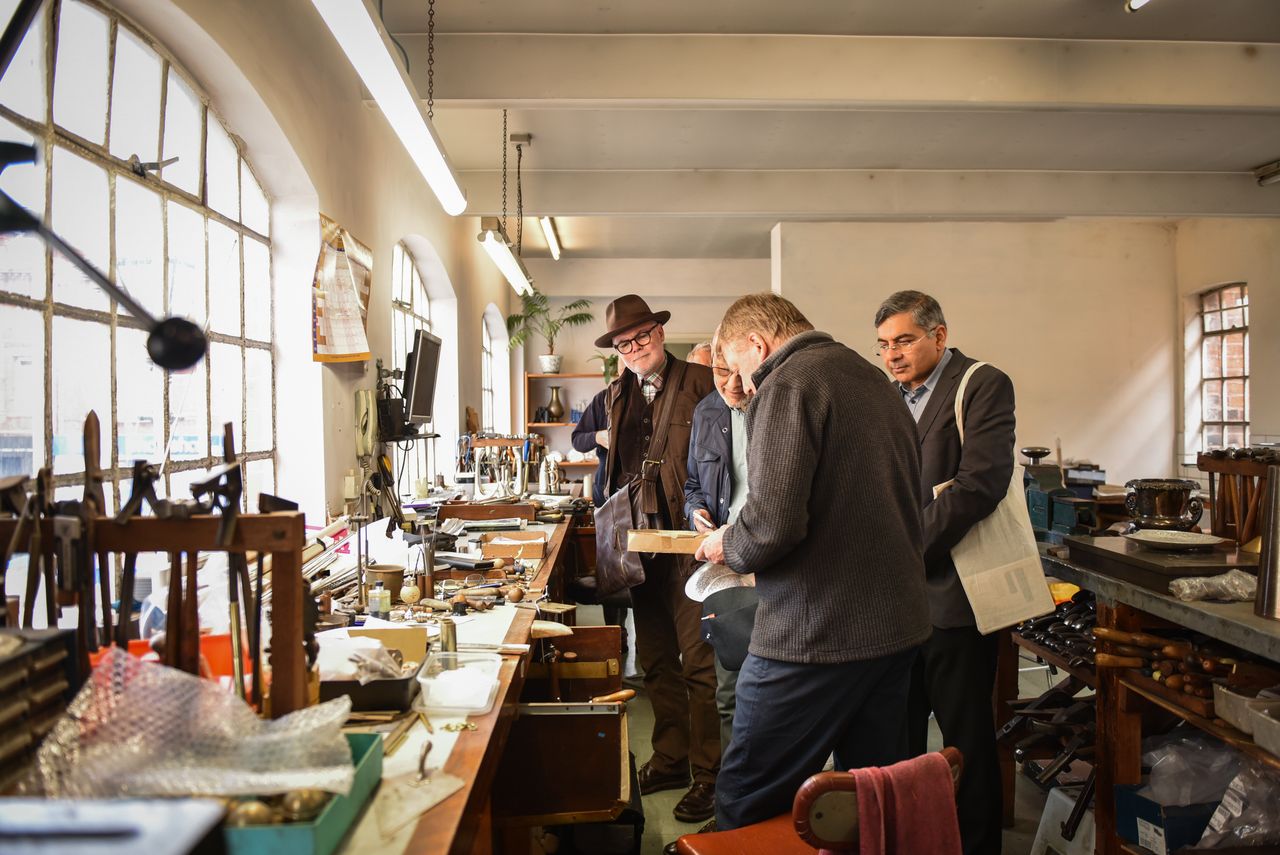
World Craft City status was granted following an intensive three-day tour of the area by a team of international judges from Mexico, India and Australia, who visited historic landmarks such as the School of Jewellery, the Assay Office, long-established manufacturer Fattorini, wholesale jeweller Cooksongold, the historic Coffin Works and other notable Brummie gems.
Birmingham’s initial application and ultimately successful bid was led by the Jewellery Quarter Development Trust and Birmingham City University, with support from Birmingham City Council and the Goldsmiths Company.
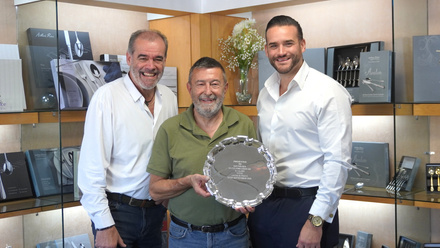
Matthew Bott, chairman of the Jewellery Quarter Development Trust, told Chamberlink: “Personally I was overjoyed and somewhat relieved. We had got all our fingers crossed for it but it was not a done deal.

“The pressure is on to be able to demonstrate that everything that is said in the application is true, within a three-day spell. Only eight have been awarded in Europe and we were just the fourth in the UK, so we are in good company.
“This is worldwide recognition. The Australian judge is the vice-president of the World Crafts Council and he said “how do we not know more about Birmingham considering that all these global brands are from the city”?
Matthew said the nature of the trades undertaken in the Jewellery Quarter allied to the “self-deprecating” Brummie mentality had often played a part in keeping the daily work undertaken by thousands of skilled workers out of the headlines.
“The trade itself is an ecosystem and for security reasons and others it kind of keeps itself to itself. The amazing things that go on in the Jewellery Quarter are treated as normal by the people who work there.
“For me and others looking into it from the outside I am saying this is spectacular, it’s the best in the world where jewellery and allied trades – goldsmithing, silversmithing, anything complementary to trophies and medals, car badges as well as diamonds and pearls – are concerned.
Matthew said the Jewellery Quarter produced between 40 and 50 per cent of all jewellery made in the UK. “If you think of mechanisation and overseas production and all that kind of stuff, it is still a substantial employer. World Craft City status is recognition for the area’s history and also for the people working there today.”
He said the global award would also help hundreds of firms in the Jewellery Quarter tackle skills shortages. “The status will hopefully help address some of the skill shortages and promote interest in the area and the goods it produces to sustain it for the next 250 years.”
Matthew said the highly skilled work undertaken in the Quarter depended on future generations learning the relevant trades. “There is a huge issue around skill shortages. The challenges are multiple, with low uptake on apprenticeships.
“Young school-leavers are often told you go to university, and then you have the professions of engineering, medicine, law etc to go into.
“There are plenty of young people that don’t necessarily realise they could have a career in the trade, and there are plenty of consumers who don’t realise that these things are made on their doorstep.
“World City status will help address that recognition, it will increase tourism and ultimately it will be great if it increases sales. The jewellery trade across Birmingham is now eligible to use the World Craft City logo in their sales material and on their websites.”
He said World Craft City status would also give “pride and impetus” to long-standing Brummie expertise in an era of Artificial Intelligence threatening traditional working practices. “There’s that broader civic pride of yes, this is made in Birmingham, and that in an era of artificial intelligence and automation people can have a career in hand-made things which will become all the more important because everything else is so automated.”
Matthew said firms throughout the Jewellery Quarter seeking to recruit new talent were often in competition with the likes of car manufacturers, law firms, hospitals etc rather than their near neighbours in the Birmingham district.
“People in the Jewellery Quarter are passionate about what they are doing. When the judges went around and said what would be a good legacy for World City status the majority of them said for young people to come in and pick up the skills that they have and then continue it for another generation.”
But despite the challenges facing the Jewellery Quarter Matthew said he was optimistic for its future. “There are really exciting opportunities. We have had a lot of interest since World Craft City status was granted and anecdotally there has been an increase in footfall in the Quarter and we would like to sustain that.”
Plans are now afoot to stage a biennial fair and show with a trade conference, bringing together the best of British and potentially international exhibitors to further cement Birmingham’s reputation on the jewellery global map.
“The Jewellery Quarter is one of the big players in the world. We have the biggest School of Jewellery in Europe, if not the world, by student numbers. Chinese students want to come to Birmingham to study, which is breathtaking.”
He also highlighted the Quarter’s unique qualities as an enduring counterpoint to the homogenisation of much of the UK’s High Streets. “It becomes more and more important to celebrate what is special that you don’t get anywhere else, and the Jewellery Quarter is one of those places.”
Matthew said World Craft City Status had helped send out a ringing endorsement of the skills still sustaining a renowned Birmingham industrial landmark after around 250 years.
“The message came out loud and clear – if you want jewellery, you buy Birmingham-made jewellery.”
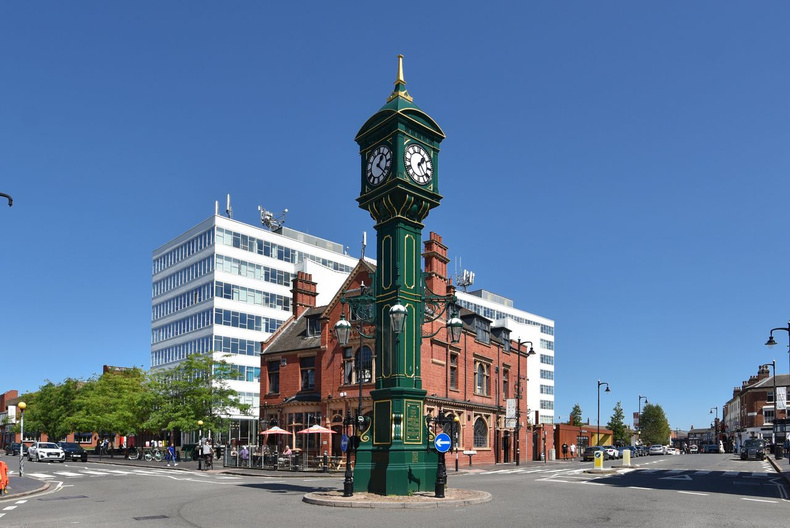
Pictured (top): The Chamberlain Clock in the Jewellery Quarter commemorates Birmingham West MP Joseph Chamberlain's visit to South Africa in 1903
This article first appeared in the October 2025 edition of Chamberlink magazine.