
A quick office guide to safely sorting problematic waste
Written by SUEZ Recycling and Recovery UK
Yep, there's such a thing as 'problematic waste' and it’s more common than you might realise, literally surrounding us in everyday environments.
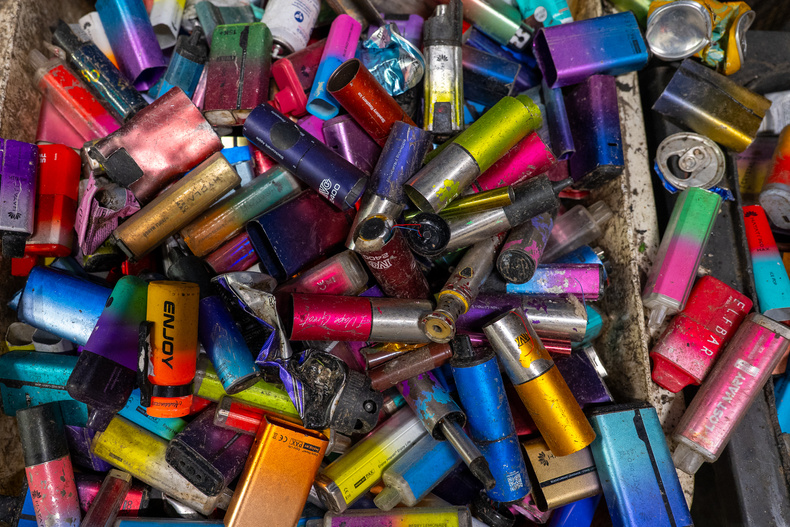
Items like lithium batteries, used vapes and frayed electrical cables often clutter desks, drawers and communal spaces. Yet, in the hectic pace of daily life, combined with distraction and ingrained habits, the impulse to toss these potentially hazardous items into the nearest bin can feel like a reckless game of 'bin roulette'. You never know what might happen next.
But why exactly are these materials classified as 'problematic waste'? The answer lies in both their confusing nature and their inherent dangers. Many people genuinely struggle to understand how to dispose of them correctly because these objects don’t fit neatly into common waste categories.
On top of that, if discarded improperly, particularly into regular bins, they pose significant safety risks, not least because some contain volatile components that can ignite or explode.
Under UK regulations, anything with a plug, battery or cable is officially classed as waste electrical and electronic equipment (WEEE). Yes, that includes that mystery charger someone left plugged into the meeting room wall in 2019 that nobody dares throw away.
By law, businesses must dispose of this material properly to keep it out of landfills. When hidden batteries or small electronics end up in general waste or recycling bins, the crushing pressure of refuse trucks can cause lithium batteries to spark and catch fire. The waste industry has coined the term ‘zombie batteries’ because they silently lurk in ordinary trash until triggering sudden, dangerous fires.
As a busy employer or manager, a fire in a collection vehicle or on your premises is a liability you don't need. With a few simple changes, you can manage this tricky waste properly without disrupting your workday.
Here are a few simple tips:
• Set up a clearly marked drop box specifically for dead batteries, vapes and old tech so they stay completely away from regular bins.
• Remember the golden rule for electricals and keep anything with a plug, battery or cable out of your general rubbish.
• Put simple visual guides right at eye level above your office bins so your team knows exactly where things belong. A passive-aggressive sticky note from someone in accounts does not count as official recycling signage.
• Encourage your staff to pause and check before they chuck, because one misplaced item can easily contaminate an entire general waste and recycling load.
You don’t have to manage commercial waste alone. Explore SUEZ resources for battery (including a downloadable guide) and WEEE disposal, for practical advice on compliance. Getting the right advice early helps your materials get a second life, so you can focus on running your business, cutting costs and staying compliant.
This article is part of SUEZ's Sort It Out series-practical guidance helping businesses manage workplace waste, reduce costs and ensure compliance. Find out more at Waste Collection in Central Englandor call our friendly team on 0800 990 3721.