Cost-of-living responses must reflect local realities, says Aston university vice-chancellor

Midlanders have been told that tackling the cost-of-living crisis starts with understanding their local communities.
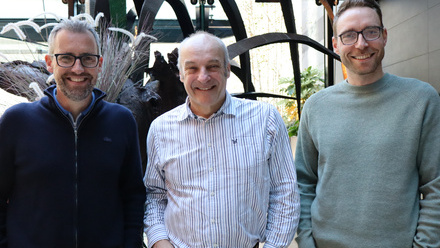
Vice-Chancellor and CEO of Aston University, Professor Colin Grant (pictured), made the comment as he opened a public panel event, called “The Cost of Living in the Midlands: What Works, What Matters, What Next?”
At the event, part of the ESRC Festival of Social Sciences, he said while headlines often focus on national statistics, the cost of living is ultimately experienced locally.
He called for tackling the cost of living not to be the responsibility of any single organisation or sector but a collective effort, informed by evidence and grounded in the experiences of those most affected.
The event held at Aston University on 28 October, the day of the Chancellor’s Autumn Statement, was organised by Midlands Innovation, which is committed to working across institutional boundaries to develop a better understanding of the issues facing communities.
It is a partnership of eight local research-intensive universities: Aston, Birmingham, Cranfield, Keele, Leicester, Loughborough, Nottingham and Warwick.
The event, which brought together policymakers, community groups, researchers, and members of the public was held to discuss social science research being conducted at the region’s universities on the cost of living, to exchange ideas and to boost collaboration in social sciences, support networking and lay foundations for future initiatives.
Professor Grant told the audience that to understand local impact, leaders need to identify what works and bring organisations together to respond.
He also highlighted the importance of social sciences research and engagement to improving communities.
The Vice-Chancellor said: “Social sciences help us understand what is happening, why it is happening, who is most affected, and what interventions can make a meaningful difference.
“At a time when public resources are under significant pressure and policy decisions are increasingly complex, evidence has never been more important. Here, social science insights have a critical contribution to make.
“Today's discussion reflects that commitment. It brings together experts whose work is helping us understand the realities of financial pressure on households, evaluate interventions already underway, and identify opportunities for future action.
“It shapes how people heat their homes, travel to work, access education, care for their families, and participate in their communities. Financial pressures are felt differently across regions, generations and sectors of society, revealing both challenges and inequalities that demand thoughtful and evidence-based responses which will directly inform policy decisions and choices.”
Following the opening speech, Professor Balazs Szent-Ivanyi, Associate Dean Research, Law and Social Sciences at Aston chaired a panel discussion of six leading experts from across the region.