
Driving in the dark: how to stay safe when the clocks go back
Written by Ben Wileman from Select Car Leasing East Midlands
2am, Sunday 25 October. Leave work at five and the light has already gone, and driving in the dark stops being an occasional thing and turns into your commute for the next five months. Wet roads. Heavier traffic. Eyes that have not done this properly since March. Nothing on that list is alarming by itself, which is sort of the problem, because it all lands on the same weekend.
What actually changes on the last Sunday in October
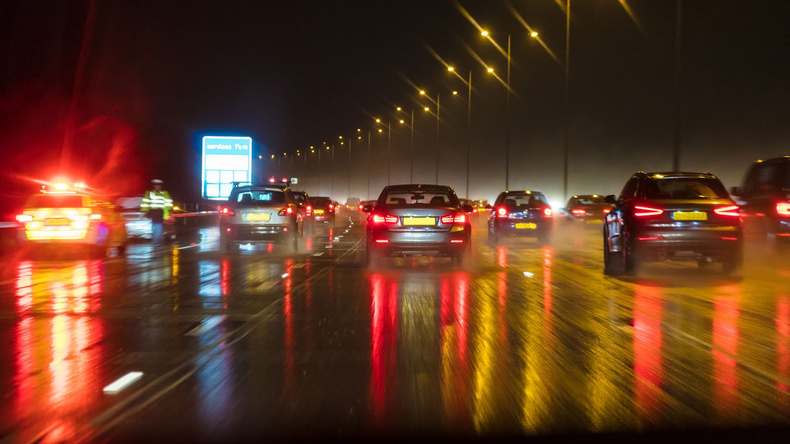
The clock change does not invent new hazards. It shifts the old ones into the dark. A journey you made comfortably in daylight at 5pm on the Friday happens at dusk on the Monday. That afternoon window is the awkward one. School traffic, tired commuters and people walking home all share it, and it is already the busiest part of the day for collisions. Driving in the dark through that hour asks considerably more of you than the same trip did a week earlier.
RoSPA has been making this point for decades. Casualty rates climb every autumn as the evenings darken and the weather turns. Department for Transport figures show pedestrian deaths rising month on month from October into December, year after year. RAC Foundation analysis of collision data between 2012 and 2017 found a small drop in injury collisions after the spring change and a noticeably bigger rise after the autumn one.
Late October is not cursed. The problem is that your eyes, your habits and your car all have to adjust across a single weekend. Depth perception drops in low light. Peripheral vision narrows. Judging how fast something is coming towards you gets harder in a way you do not really notice until you have got it wrong, which is why the first fortnight of driving at night after the change is when mistakes tend to bunch up. And anything you have been ignoring on the car since March will pick roughly that fortnight to announce itself.
Sort your lights out before the clock change
Lights are the cheapest fix you will ever make and the first item on any sensible list of winter car checks. Ten minutes on the driveway covers most of what matters for driving in the dark. Driving after dark without working front and rear lights is an offence, and a blown bulb you never noticed is an easy way to get pulled over.
Check every bulb, not just the headlights. Sidelights, brake lights, indicators, fogs and the number plate light all count, and rear bulbs die unnoticed far more often than front ones.
Clean the lenses properly. A film of autumn road grime cuts your light output more than you would expect, and clouded plastic housings scatter the beam instead of throwing it down the road.
Switch on earlier than feels necessary. The RAC suggests dipped headlights from about an hour before sunset until an hour after sunrise, on the basis that this is about being seen, not only about seeing.
Get your aim checked. Alignment is part of the MOT, but the DVSA has flagged headlamp aim as one of the items testers most commonly get wrong. If oncoming drivers keep flashing you, that is your answer.
Do not leave it all to the automatic sensor. Most of them react to ambient light rather than fog or heavy spray, which is exactly when you want to be lit up.
Learn where your fog lights are, and when to turn them off again. Left on in clear conditions they just dazzle whoever is behind you.
Glare is the biggest complaint on British roads right now
Driving in the dark is harder than it was ten years ago, and it is not only your eyes. The RAC surveyed 1,745 regular drivers in early 2026.
Ninety four per cent said they get dazzled by oncoming vehicles, and roughly a third said it happens regularly. Of those affected, 57 per cent reckon it has got worse in the space of twelve months. Headlight glare has stopped being a niche moan and started deciding whether people go out driving at night at all.
That last part is worth sitting with. A quarter of drivers who find headlights too bright have cut back on night journeys or given up on them entirely, and among the over 75s that figure reaches 43 per cent. Glare from behind is nearly as bad, with around six in ten dazzled in their mirrors with no obvious way to avoid it. Brake lights get some of the blame too, largely because auto hold systems keep them lit in stationary traffic where a handbrake would not.
The government asked the Transport Research Laboratory to investigate, and its 2025 report broadly backed drivers up.
You cannot do anything about other people's headlights. You can make yourself less vulnerable to them. Clean the inside of your windscreen and not just the outside, because interior film turns one bright light into a starburst.
Flip the rear view mirror to its dipped setting. When you do get dazzled, slow down and use the nearside white line as your guide instead of looking away from the road entirely. Get an eye test booked before winter if you wear glasses, and skip the aftermarket anti glare coatings, which have very little evidence behind them.
Managing headlight glare is one of those night driving tips that earns its keep on every single journey.
Habits that make the biggest difference after 25 October
Kit gets you halfway. The rest is how you actually drive once the light has gone, and the best night driving tips are small, boring ones that do more for your winter driving safety than anything you can buy. None of this makes driving in the dark enjoyable. It just closes the gap.
Leave more room. Judging closing speed is harder after dark, so treat two seconds as a floor rather than a target.
Use full beam on unlit roads, but dip early, switch to dipped headlights as soon as you see another vehicle or cyclist, not once you're level with them.
Look for the unlit. Pedestrians in dark coats, cyclists with feeble lights and rural bends with no markings account for a lot of autumn incidents.
Take tiredness seriously. Dark road, warm cabin, long day at work. Fifteen minutes in a lay-by beats pushing on.
Pick a different route. A slightly longer lit A road usually beats a shortcut down an unlit lane with standing water across it.
Conclusion
The clock change is one of the very few road safety events you can see coming weeks in advance. Bulbs, glass, alignment, tyres, and a bit of honest thought about how you drive once it is dark. It costs almost nothing, and it lands right before the darkest and wettest stretch of the year. Do your winter car checks on the Saturday before the last Sunday in October and the whole transition becomes routine.
Treat the date as your annual prompt for winter driving safety rather than something you get round to in December, once it has already caught you out. And if the car itself is fighting you on lighting, grip and visibility, that is worth doing something about too.
Frequently Asked Questions (FAQs)
Q1: When exactly do the clocks go back in 2026? A: 2am on Sunday 25 October. That is the end of British Summer Time, and we stay on GMT until the last Sunday in March.
Q2: Does driving in the dark actually make a crash more likely? A: Yes. Casualty rates climb through the autumn as evening journeys shift into darkness, and the collision data shows a clearer jump after the October change than after the one in March. Late afternoon and early evening is the window to watch.
Q3: When should I put my headlights on? A: Roughly an hour before sunset, and leave them on for an hour past sunrise. If it is gloomy or raining, earlier.
Q4: Are dazzling headlights illegal? A: The Highway Code says you must not use lights in a way that dazzles other road users, and that is backed by the Road Vehicles Lighting Regulations 1989. So badly aimed headlights, or a heavily loaded boot tipping them up towards the sky, can leave you liable even when the bulbs themselves are perfectly legal.
Q5: Do I need winter tyres? A: Not legally, no. They do grip better below seven degrees. At the very least, check your tread and pressures before the clocks change, because wet grip fades a long way before you get anywhere near the 1.6mm limit.