
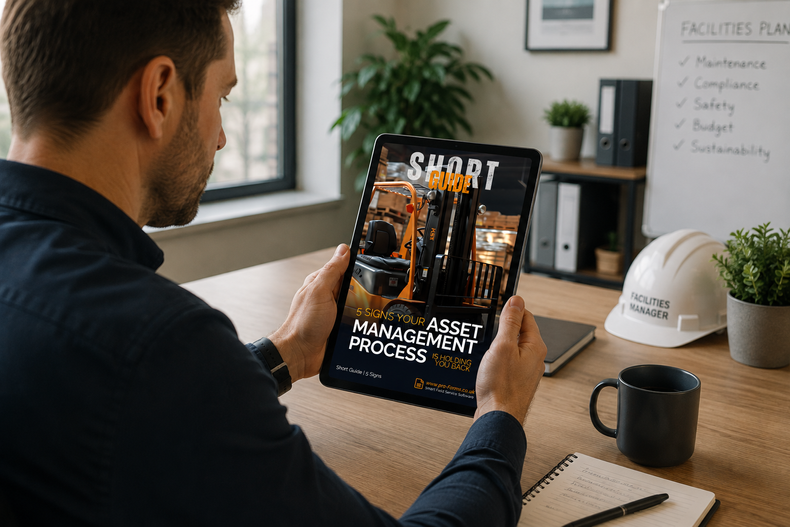
Five signs your asset management process is holding you back
Written by Jon Crofts from ResourceTrack
As organisations grow, so too does the complexity of managing their assets.
What may have started as a simple spreadsheet or a collection of maintenance records can quickly become difficult to control. Information becomes scattered across departments, compliance activities become harder to monitor and valuable time is spent searching for records instead of making informed decisions.
Whether you're responsible for facilities, engineering, maintenance or operations, effective asset management is essential. Accurate information, clear visibility and consistent processes help organisations improve efficiency, reduce costs and minimise operational risk.
So, how do you know when your asset management processes need attention?
Why good asset management matters
Assets are often among an organisation's most valuable resources. Whether you're managing buildings, production equipment, vehicles or infrastructure, having reliable information available at the right time supports better planning and smarter decision making.
When asset management processes become fragmented, organisations commonly experience:
- Increased operational costs
- Unplanned downtime
- Missed compliance activities
- Reduced productivity
- Poor decision making
- Shortened asset life
- Increased business risk
Many of these challenges develop gradually, making them easy to overlook until they begin affecting day-to-day operations.
Five common warning signs
1 You're relying on multiple spreadsheets
Spreadsheets can be an effective starting point, but as asset portfolios grow they often become increasingly difficult to maintain.
Different departments may hold different versions of the same information, making it difficult to identify which records are accurate and up to date.
2 You can't see the complete picture
Asset information is frequently spread across maintenance records, inspection reports, compliance documentation and contractor files.
Without a central source of information, answering straightforward questions such as where an asset is located, when it was last serviced or what work has been completed can take far longer than it should.
3 Compliance activities are difficult to manage
Inspection schedules, servicing requirements and statutory maintenance become increasingly challenging to coordinate when managed manually.
Missed inspections, overdue actions and incomplete records all increase operational and compliance risk.
4 Maintenance is largely reactive
If maintenance activities are driven by breakdowns rather than planning, organisations often experience increased downtime, emergency repair costs and reduced asset reliability.
While reactive maintenance can never be eliminated entirely, greater visibility of assets makes preventative maintenance much easier to achieve.
5 Reporting takes too much time
Asset data should help organisations make informed decisions.
If producing management reports requires hours of manual work, the information is often already out of date by the time it's reviewed, making it harder to identify trends, prioritise investment and plan future maintenance.
How digital asset management can help
Many organisations choose to support their asset management processes with digital tools that bring information together in one place.
By creating a single source of truth for asset records, maintenance history and compliance activities, organisations can benefit from:
- Greater visibility of assets and their condition
- Faster access to maintenance and inspection history
- Improved compliance management
- Better reporting and operational insight
- Mobile access for field teams
- More informed decision making
Technology is most effective when it supports well-defined processes, helping organisations spend less time managing paperwork and more time improving operational performance.