
How to handle bottlenecks hiding between your production processes
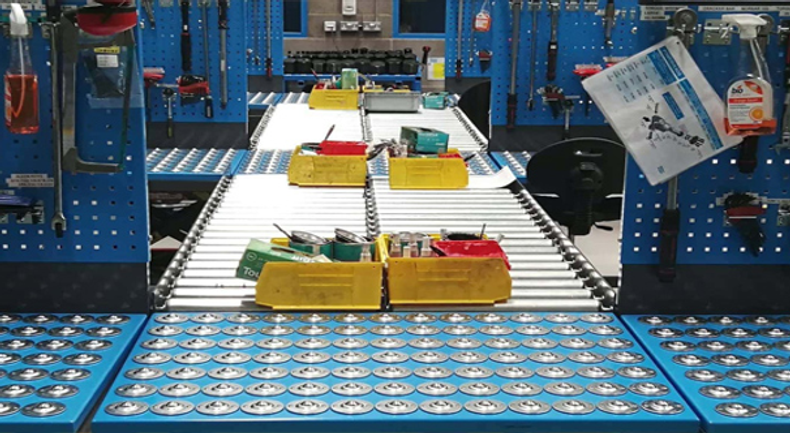
Written by Alwayse Engineering
A machine finishes its cycle. The next workstation is ready. Yet the job still cannot move forward because someone must find a trolley, turn a heavy component or clear space on a crowded bench.
For a business trying to increase output, these moments deserve attention. Looking only at machine performance can leave the work between processes unexamined.
The same question applies in a warehouse, a packing area or a workshop: how much effort goes into moving and positioning goods before the next useful task can begin?
Before specifying new equipment, follow one item through the operation.
Follow the item including the pauses
Choose a representative product or order and trace its route from arrival to dispatch. Record each occasion when it is lifted, carried, turned, transferred, set down or left waiting.
Keep processing time separate from handling and waiting time. A component may spend only a short period being machined, inspected or packed, but considerably longer waiting for space or transport.
Pay particular attention to repeated handling. If an item is put down temporarily, why can it not go directly to its next destination? If it must be turned several times, could its presentation at the previous stage change?
The purpose is to understand what the process requires people to do. An awkward movement may be a sensible response to a layout that gives the operator few alternatives.
Examine where processes meet
Look closely at the points where one activity hands over to another.
Does a trolley arrive at a different height from the bench? Must a load change direction in a confined space? Does an inspection station have enough room for incoming and completed work?
Consider a packing station where an operator repeatedly lifts a box to turn it for labelling. Questions worth asking include whether the label position could change, whether the box could arrive in a better orientation, and whether suitable equipment could allow controlled repositioning.
No single arrangement will suit every load. Weight matters, but so do dimensions, rigidity, stability and the condition of the surface in contact with the equipment.
Assess the complete transfer, including how the item arrives, moves and leaves.
Ask the people doing the work
Observe the task with employees and ask where the process becomes difficult.
Which items are awkward to move? When does a second person become necessary? What changes during a busy period? Which workaround has become part of the normal routine?
Include different shifts and a realistic range of loads. A workstation that appears satisfactory with one standard item may behave differently with an oversized package or an unevenly distributed load.
Record the circumstances as well as the complaint. “Difficult to move” becomes more useful when it identifies a particular load, direction, surface or point in the task.
Consider safety alongside flow
Reducing handling time is only part of the assessment. A proposed change must also be examined for the risks it introduces or leaves unresolved.
The Health and Safety Executive’s guidance sets out the approach to hazardous manual handling: avoid it where reasonably practicable, assess unavoidable operations and reduce the risk of injury. Manual handling includes pushing and pulling as well as lifting and carrying.
Putting a load on wheels, rollers or another moving surface does not remove the need for assessment. HSE notes that pushing and pulling can still present a risk of musculoskeletal injury.
Check the effort needed to start, steer and stop the load. Consider posture, repetition, trapping points, stability and unintended movement. Make sure the assessment reflects the actual workplace and the people using it.
Test one change against the whole process
Choose a clearly defined problem and record a baseline before making a change.
Useful measures might include handling time per item, the number of lifts or repositioning movements, queue length, damage and occasions when a second operator is needed.
Where suitable and safe, trial a change on a limited scale. This might involve repositioning materials, adjusting an approved workstation arrangement or testing handling equipment with representative loads.
Then look beyond the immediate task. Has the improvement reduced the overall order completion time, or simply delivered work more quickly to an already congested station?
A faster transfer is useful when the surrounding process can accommodate it.
Make the improvement maintainable
Before adopting the change, establish how it will be cleaned, checked and maintained.
Can staff reach the parts that need attention? Can damaged components be replaced without dismantling the surrounding installation? Who will notice and report a change in performance?
Assign responsibility and review the arrangement once it has been used under normal conditions. Include employee feedback alongside the timing data.
For businesses reviewing productivity, the movement between processes deserves as much attention as the processes themselves.
Alwayse Engineering’s work in material handling starts with these connections: understanding the load, the task and the operating conditions before selecting a solution.