New report calls for urgent action to tackle youth unemployment in Birmingham

A major new report commissioned by The Rigby Foundation and The Sir Peter Rigby Charitable Trust, has set out practical steps to address the external forces that have created a “perfect storm” facing young people in Birmingham and the wider West Midlands labour market.
The report, Inspiring Futures: Improving employment outcomes for young people in Birmingham, was launched at a parliamentary reception last night in Westminster, where Liam Byrne MP, Member of Parliament for Birmingham Hodge Hill and Solihull North, spoke to express support.
Produced by the City-Region Economic Development Institute (City-REDI), at the University of Birmingham, with an advisory panel including representatives from Greater Birmingham Chambers of Commerce, Birmingham City Council, West Midlands Combined Authority, local employers and education experts, the report highlights how economic disruption, technological change and declining access to work experience are combining to create a growing youth employment challenge - with so-called “starter jobs” falling by nearly half (49 per cent) over the past decade.
While the report acknowledges laudable initiatives across Birmingham, it calls for a coordinated response, focused on improving access to meaningful work experience, equipping young people with artificial intelligence (AI) skills, strengthening employer engagement, and overhauling careers guidance.
The report warns that structural changes in the labour market - accelerated by Brexit, the Covid-19 pandemic and global instability - have reduced entry-level opportunities, particularly in sectors where young people are most likely to begin their careers.
Young people’s aspirations remain concentrated in a narrow set of traditional professions such as medicine, law and the creative industries, despite growing opportunities in digital, data and green sectors.
At the same time, rapid advances in AI are reshaping employer expectations, with demand rising for both technical skills and human capabilities such as communication, creativity and problem-solving.
Despite this, access to work experience and high-quality careers guidance has declined, leaving many young people disconnected from local opportunities.
According to the report, conservative modelling of sectoral contraction and AI disruption, projects an output loss of £3.1 billion and 27,600 jobs across age groups in the West Midlands by 2030.
Nationally, youth disengagement is estimated to cost £125 billion a year, and the NEET rate is forecast to rise further without reform.
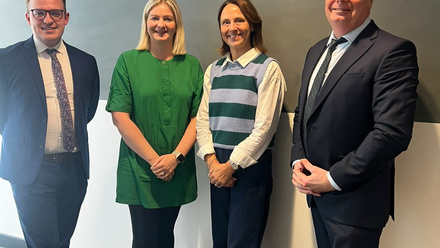
Steve Rigby (pictured), chair of The Rigby Foundation and CEO of Rigby Group, said: “This report makes clear that we are not facing a failure of ambition among young people, but a failure of opportunity.
“The system designed to support them into work is not keeping pace with a labour market that is changing at an unprecedented pace. We need to do more to connect our region’s young people to the opportunities that already exist on their doorstep.”
Richard Parker, mayor of the West Midlands, said: “This report highlights a challenge that affects both individuals and the region: when young people succeed, businesses can access the talent they need and our economy will be stronger for it.
“We’re making good progress, but there’s still a way to go. It’s only by working together and acting on these recommendations that we will unlock a better future for our young people, and the skills our businesses need.”
Joanne Roney, managing director of Birmingham City Council, said: “I firmly believe that the young people of Birmingham are our most valuable resource and through them our potential is limitless. I welcome this work, the leadership of the Rigby family’s charities and the contributions of all our key partners.
“As a proud Brummie, this is not an easy read in places, but we must be bold and face the challenges that are impacting the futures of our young people, and consequently our city as a whole. I recognise the innovative work underway across Birmingham and the impact this is already having but we have to do more.”
Professor Anne Green, City-REDI, University of Birmingham, said: “This report shows that while action is underway to tackle youth unemployment and economic inactivity in Birmingham, the system is still falling short.
“It remains too fragmented, and outcomes are not yet where they need to be. Real progress will require stronger collaboration between partners, building on what already works, and putting young people’s voices at the centre to create a system that truly delivers for the city’s young people.”
The report identifies four practical recommendations for change - transform work experience by creating a modern, flexible system combining in-school, hybrid, and in-person placements; launching an AI training fund for educators and pilot AI literacy modules to prepare young people for the future of work; strengthen employer engagement by introducing ‘Introduce Entrepreneurs in Residence’; and delivering comprehensive careers guidance by upskilling careers advisers in AI and labour market trends.