
New report highlights untapped potential of Birmingham’s music scene as driver of cultural tourism
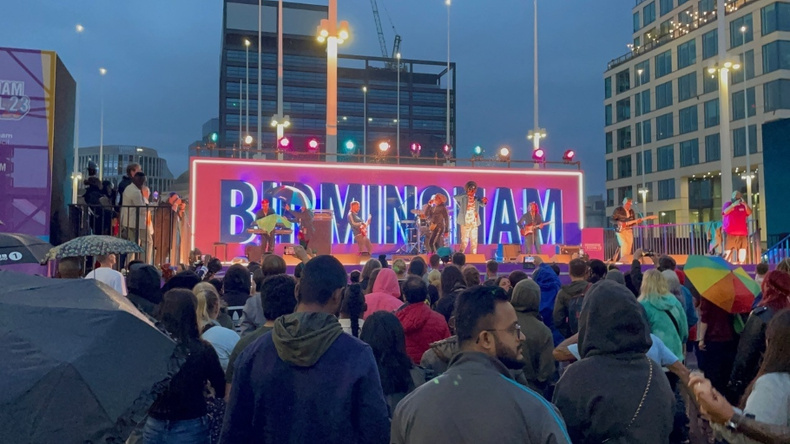
A new study has been published highlighting a major opportunity to transform Birmingham’s music tourism offer.
The Birmingham Music Visitor Experience: Options and Considerations Report sets out the scale, strength and untapped potential of the city’s music scene past and present as a driver of cultural tourism and economic growth.
The Birmingham Music Visitor Experience project is a collaboration between the Live Music Mapping Project at Aston University, led by Dr Patrycja Rozbicka, Birmingham Museums Trust, Birmingham Music Archive, cultural consultant Lara Ratnaraja and Birmingham City Council, with support from the UK Shared Prosperity Fund.
The Project’s new report finds that Birmingham is a globally significant music city, having a culturally rich and plural musical identity spanning metal, reggae, bhangra, jazz, electronic and many other genres, with deep grassroots community activity across neighbourhoods such as Digbeth, Handsworth and Kings Heath, along with global music stories shaped by migration and working-class culture.
While earlier estimates suggest that the West Midlands attracted around 1.4 million music tourists generating approximately £550 million annually, this report provides a much more detailed, evidence‑based understanding of Birmingham’s music visitor economy.
It identifies a highly diverse and spatially distributed network of 300 plus live music‑related assets across the city, spanning grassroots venues, community spaces, mid‑scale stages and major arenas.
Rather than being concentrated in a single district, these venues are embedded across neighbourhoods such as Digbeth, Handsworth and Kings Heath, highlighting Birmingham’s distinctive polycentric music ecology.
The report also provides new insight into visitor value, showing an average spend of £142 per visit, with over half of visitors spending more than £101 across tickets, food, drink and accommodation.
Together, these findings demonstrate that Birmingham’s music visitor economy is already substantial, but that its future growth lies in better connecting this dispersed offer to increase dwell time and overall economic impact.
The report highlights that there is no lack of music, talent or highly engaged audiences in the city, but that a gap exists in terms of presenting this musical richness as a visible and navigable experience.
The study also found that visitors are not looking for a single attraction, but a joined-up, multi-layered experience that blends major anchor attractions with city-wide exploration, including live music, heritage sites, neighbourhood trails, food and nightlife.
To unlock this potential, the report identifies four priority areas for action:
-
Strengthening live music and festivals
-
Expanding heritage, exhibitions and storytelling
-
Encouraging neighbourhood exploration and trails
-
Better integrating of music with food, nightlife and wider culture.
Dr Patrycja Rozbicka, senior lecturer and associate professor in politics and international relations at Aston University, said: “Birmingham is not an emerging music city. It is an established one.
“The challenge - and the opportunity - is to connect what already exists into a confident, inclusive and sustainable music visitor experience that reflects the reality of the city and tells its story to the world.
“The report makes clear that the barriers holding Birmingham back are systemic rather than cultural.
“Fragmented communication, limited coordination, weak visibility, and challenges around transport and night-time connectivity all constrain how confidently visitors can move through the city.
“These are not peripheral issues - they directly shape dwell time, visitor confidence and economic impact.”
Charlotte Holmes, director of engagement at Birmingham Museums Trust, said:
“We are delighted to be part of this project to help to shape what a future ‘music-led’ visitor experience might look like.
“The publication of this report marks an important step toward aligning partners across culture, tourism and the music industry to develop a more visible, accessible and connected offer.”
The full report can be accessed online.