Our region has the ideas and ambition - now it needs delivery

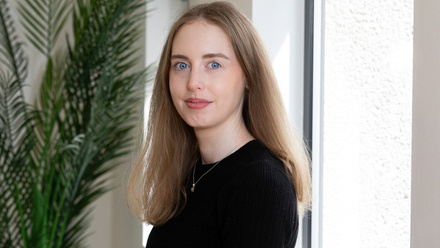
Some of you will know that just under a year ago, I became a parent, writes Henrietta Brealey.
Since then, I’ve found myself asking a simple question - what sort of world will my son grow up in?
If I’m honest, there have been moments - often at 3am, doomscrolling the news - when the answer has felt pretty bleak. And I suspect many in business will recognise that feeling.
The headlines are rarely reassuring - political uncertainty, global instability, rising costs, questions about growth, the future of our city council, the pace of technological change.
These aren’t abstract concerns. They affect investment decisions, hiring plans, supply chains and confidence.
And yet, I feel optimistic - both about my son's future and that of our region.
Not blind optimism. Not ignoring the challenges. But a grounded, hard-earned optimism shaped by what businesses here are actually doing.
Last Thursday, more than 1,000 people gathered at the ICC for the Greater Birmingham Chambers of Commerce Awards. The room reflected the full breadth of our business community - entrepreneurs, employers, educators, civic leaders and community champions.
The finalists ranged from global brands to growing SMEs, from household names to hidden gems. What united them wasn’t size or sector - it was impact, right here in Greater Birmingham.
At a time when headlines can feel relentless, the awards were a powerful reminder - this region is full of people building, innovating and leading with purpose.
They are creating jobs, strengthening communities, embracing change and delivering real value.
And that matters, because confidence is built on evidence - not rhetoric. And the evidence is clear - Greater Birmingham’s business community remains a formidable force.
We see that same potential in the opportunities taking shape across our region.
Take the Birmingham East Mayoral Development Corporation. Now formally established, it brings real momentum - even against a backdrop of wider uncertainty.
At its core, the Mayoral Development Corporation is designed to speed up investment and regeneration by aligning key powers and responsibilities under a single, focused body, spearheaded by West Midlands mayor Richard Parker and backed by both Birmingham City Council and the West Midlands Combined Authority.
It covers an area of the city that is set to be transformed out of all recognition in the coming years, encompassing the Sports Quarter, Knowledge Quarter, Curzon Street, Smithfield, Digbeth and Central Heart regeneration areas.
Last week, we held a private discussion for our Patrons with MDC leaders. The sentiment was clear - done well, it offers something powerful: the ability to align planning, land, funding and delivery to unlock sites that have stalled for too long.
It was encouraging to hear a clear commitment to involving local firms. Because regeneration cannot happen around our business community - it must happen with it.
If the MDC is to succeed, SMEs need clear routes into procurement, visible pipelines of opportunity and engagement early enough to matter.
That’s where the Chamber plays a critical role - connecting businesses, amplifying their voice and ensuring growth is broad-based, not concentrated.
The prize is significant: new homes, new commercial space, better infrastructure, stronger supply chains and renewed confidence.
The same applies beyond the MDC to the wider HS2 Growth Corridor - one of the most important growth opportunities in the country.
The HS2 Growth Corridor is a concentration of major economic assets - universities (including 5 of the top 100 universities globally), innovation centres, scale-up spaces and businesses - stretching from the West Midlands through Birmingham and Solihull to West London and Euston along the route of HS2.
It brings together the key ingredients for growth, from cutting-edge research and emerging industries to places where ideas can be commercialised and scaled. Crucially, it will be connected by high-speed rail, linking these centres in under 50 minutes and creating a powerful, joined-up engine for national economic growth.
Infrastructure alone won’t deliver its full potential. The real challenge is coordination: aligning assets, attracting investment, backing innovation and ensuring businesses of all sizes can participate.
Again, at the Chamber, we look forward to keeping business at the centre of that conversation.
Because whether it’s HS2, UK Central, the Sports Quarter, the West Midlands Interchange or the MDC, our region does not lack opportunity.
What matters now is delivery - and delivery at pace.
Which brings me to a necessary note of caution.
Birmingham City Council is currently in a period of real uncertainty. At the time of writing, following the 7 May elections, no party has overall control, and there is no clear path to a stable administration.
That uncertainty cannot drift.
Businesses understand political complexity. But they also need clarity, leadership and a council able to make decisions.
The stakes are simply too high. Investors need confidence. Residents need services. Businesses need to know who is leading, what the priorities are and how the city will work with them.
So yes - there are strong reasons to be optimistic.
But optimism alone is not enough.
Delivery must follow ambition. Leadership must match opportunity.
Because the story of this region has always been one of resilience, reinvention and determination.
Last week, at our awards, I saw that story in action - in the businesses shaping our future.
Now we need our civic institutions to match that same energy.
Because when business succeeds, our region succeeds.
And despite the noise, the uncertainty and the difficult headlines, I remain convinced that Greater Birmingham has the people, the ideas and the ambition to write its next chapter - and to do so with confidence.
Henrietta Brealey is CEO of Greater Birmingham Chambers of Commerce
This column first appeared in the Birmingham Post