
Search marketing state of play 2026: 4 trends, 3 tips and 2 totally unanswered questions
Written by Michael Farr from mff marketing
The way users search has changed.
- Zero-Click Search: 68 per cent of searches on Google now end without a click to a website (SparkToro)
- AI Search: Nearly 1 in 2 now use AI search as their preference (McKinsey - The New Front Door to the Internet)
- Social Search: 43 per cent actively search on social media daily (Ofcom - Adult Media Use & Attitudes Report)
People searching in more channels and platforms and less clicking out to websites, is having real-world impacts for businesses:
- Less traffic from search engines
- Increased costs for search ads
- In some cases reduced sales & leads
The good news is, 2026 has started to see the development of a playbook to grow your visibility across multiple search platforms.
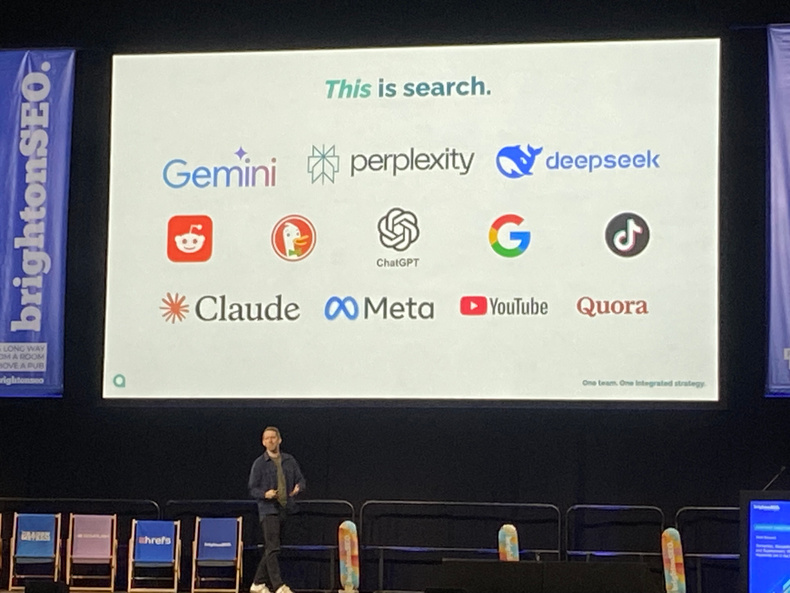
mff marketing was at brightonSEO earlier in the year, and this years event was packed with lots of practical tips for businesses. Google themselves are also giving more insights into multiplatform search. Search Console recently introduced tracking for social media content in search results, which will be huge!
This blog covers:
- How search marketing has changed? Four trends to be aware of...
- Tips to build a search strategy for 2026 & beyond. Three tips from live campaigns I have run with clients...
- Unanswered questions…? Two key questions to be addressed by search marketers in 2026...
Search marketing has changed
I have 15+ years’ experience working in search marketing with global brands across a range of sectors and services including SC Johnson, Diageo, Wickes & IKEA. The past 2 years have seen more changes in search marketing than the 14 prior!
Four key changes to be aware of?
1 Search marketing is no longer just Google
Search is split across several channels including: social media, marketplaces like Amazon and AI search engines. An integrated approach is required to grow brand visibility across them all.
2 No longer just keywords
Search platforms have shifted. Traditional they were keyword focussed, with a search term and a list of 10 blue links. Today, users can converse with with AI search engines and get personalised responses, or search & watch videos on social media.
Businesses need to understand the conversations their audiences are having, not just the keywords searched.
3 Move to brand awareness vs traffic
Search had always been a traffic driving channel. However, with less clicks to websites, businesses need to focus on different KPIs for search marketing including: mentions in AI answer, visibility on social media and website citations.
4 Not just your website
McKinsey’s State of Search report found that 90 per cent+ of content AI looks at to answer a question comes from sources brands don’t own: influencer videos, reviews, PR and news. To be visible in AI search results a on-site and offsite approach is needed.
Lots of updates but, strong SEO remains the foundation.
The foundation to being visible across AI search engines is a strong SEO presence. Businesses need to ensure they are maximising the visibility of their site whilst also expanding other channels: social media, PR and 3P content (reviews, testimonials, directory listings).
What does it mean for your business? Three tips to grow AI visibility
For any businesses looking to develop their search marketing plans, I suggest the below steps:
1 Identify the key topics and conversations (prompt research)
Building authoritative content in your niche is key to rank across search, social media and AI search. I use a range of tools to understand conversations around my clients services. Once you know the conversations it's about distributing your content in the right channels. Suggested tools: OtterlyAI Reddily AlsoAsked
2 Track which search channels your consumers use
Search is now fragmented across multiple channels. Understand which channels and platforms your audience uses and focus on growing these first. SparkToro is a perfect tool for this.
3 Understand your visibility across AI search
Nearly half of people use AI search as their main source of information. Understanding which websites are visible in AI search results is key for your business. I am partnered with OtterlyAI and track all my client’s sites via this tool.
Now, for the unanswered questions?
The last 2-years have seen a huge shift in search marketing, driven by changing user search habits.
We now understand how to track and influence visibility across social search and AI search engines. However, there are still some key questions to be answered as search marketing moves from a traffic to an awareness channel.
Area to answer: What is the KPI if searchers don’t click? And how to quantify the impact?
Old-school search was great. Most shoppers would search, click and act, making it easy to report on the impact of SEO and paid search ads. With less clicks, it’s become a lot more challenging.
Search marketing is even being spoke of as a brand awareness channel, which seems a world away from the early days.
SimilarWeb tested the impact of AI search visibility earlier this year and did find that users were 2x more likely to visit brands mentioned in AI overviews, however studies are limited, especially for SME businesses, so an area that will remain a focus going forward.
Area to answer: We Know how to be visible for the answer, but what is the question?
Keyword research has always been easy. Google Keyword Planner, Amazon, AHRefs and Search Trends could always show demand for a keyword and search volume. This made it simple for brands to understand which high volume searches were worth their time and effort.
When you’re optimising for prompts or visibility in conversations, understanding the demand is much harder. You need to go deeper than just short-tail keywords.
I’m using several tools to understand conversations through: social listening tools, keyword search volume, query fan outs and more. However, given how critical building authoritative content around specific topics has become. Understanding the questions people asked in detail will become increasingly important.
How are you identifying prompts to optimise for?
I would love to hear your thoughts on how search is developing and your approach to the questions above.
For more practical search marketing tips, sign up to my newsletter (link at mffmarketing.co.uk). Each month, I share practical tips to understand where your users search, prompt research (the conversations they are having) and how to track visibility in AI search.