
Starting before you feel ready: Four lessons for young entrepreneurs
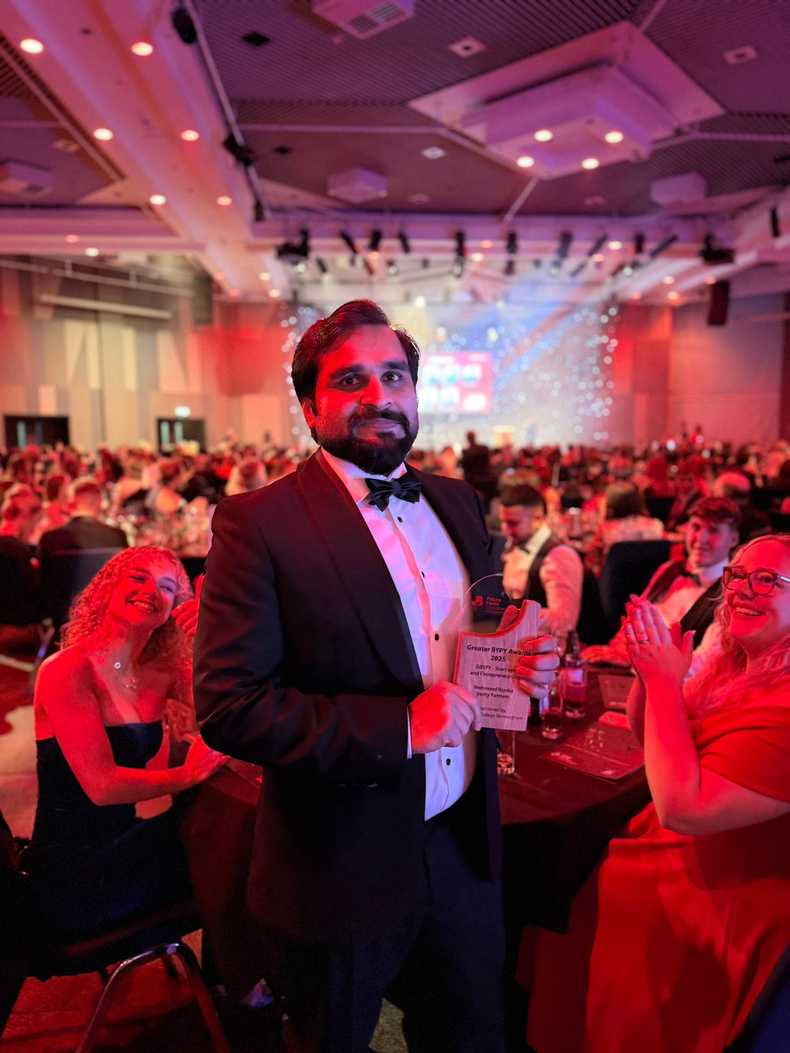
Written by Mehmood Rajoka, partner at RR Accountants and founder of Rajoka
I was born in Faisalabad in Pakistan and moved to the UK in 2011. I didn't know anyone here. No plan, no contacts, no qualification anyone recognised.
My first job was in IT support, because IT was what I loved, and I studied accounting alongside it. For the first few months I wasn't building anything. I was learning the country, the culture and how things work here.
The step that changed everything looked like a step backwards. A friend who was a client of RR Accountants introduced me to the firm, and I offered to work as a bookkeeper for nothing. Unpaid.
I didn't feel ready to be in a professional firm, I didn't feel ready to tell anyone I wanted to own one, and I certainly didn't feel ready to work for free.
I did it anyway, because the discipline of accounts is the discipline that runs every business, and there was no other way in for someone like me.
Feeling ready is not the same as being ready. The feeling comes later, once you've done the thing a few hundred times. If I had waited for it I would still be waiting. In 2022 that unpaid bookkeeper became a partner in the firm.
I couldn't believe it that day. I had never thought it could happen so early, and part of me waited for someone to say there had been a mistake. Nobody did. The firm became the base that everything since has grown from.
Don't wait for perfect conditions
There was never a good time to buy into an accountancy practice, lead a digital transformation of it, or build a group of companies on top of it. The money was always tighter than I wanted, the team was always smaller than the plan needed, and someone always had a sensible reason to wait a year.
Perfect conditions never came. We built with what we had and fixed things as we went. When we changed how RR worked, moving a traditional firm onto modern software and processes, we did it while serving clients, filing returns and answering the phone. Nothing paused to let us get ready.
The same was true of the award. I wasn't prepared for it and I didn't even know the Greater Birmingham Young Professional of the Year Awards existed. A Chamber member I met through a mutual friend heard my story, talked it over with me a few times and told me to enter. I wouldn't have done it alone.
Rajoka was new and it would have been easy to say I should wait until there was more to show. Winning Young Professional of the Year 2025 in the Start-up & Entrepreneurship category didn't happen because the conditions were right. It happened because I entered anyway.
Learning how to handle rejection
Nobody tells you how much of building a business is being told no. My first UK visa application was refused in 2009. After I arrived I was turned down for jobs and passed over for promotions more times than I can count. Landlords said no. Banks said no. That's the usual part, and it still stings every time.
Rejection doesn't stop once things start to work. In 2025 I was a finalist at the Asian Business Chamber of Commerce awards and shortlisted for Entrepreneur of the Year at The Birmingham Awards. I won neither.
I took both on the chin. But every shortlist that doesn't turn into a win teaches you what judges actually want to see: a number, a date, and a person who can be asked whether it's true.
Those two losses taught me what a winning entry needs before the Chamber awards came round. If you look at a loss honestly instead of sulking about it, it tells you exactly what to fix.
The one habit I'd pass on: don't take a no personally. A no from a bank, a client or a judging panel is a decision about one proposal on one day. It isn't a decision about you. Treat it as information, change what you can, and go back.
Surrounding yourself with the right people
Two people brought me into RR Accountants. A friend who was a client of the firm made the introduction.
The partner at the time gave an unpaid bookkeeper a desk and kept the door open, and years later I bought his share of the firm. I wouldn't be writing this without either of them. The right people aren't the ones who agree with you.
They're the ones who tell you the plan is weak and then help you fix it. You find them by doing things in your community, not by collecting contacts.
That's why being present in Birmingham matters more to me than any marketing plan. In the last year or so I've been to something like thirty Chamber events: the Expo, Bank of England roundtables, Business Growth Studio workshops, Asian Business Chamber evenings.
Turning up isn't the hard part. The hard part is following up, and being useful to the people you meet before you need anything from them. The person who becomes your next partner, hire or client is usually standing a few feet away.
What winning changed
Three things changed. The first is opportunities. I've sat at a Bank of England roundtable through the Chamber. In October I was at the House of Lords for a report launch, talking with the Minister and Shadow Minister for AI and the chief executive of Sage.
None of those rooms were open to me two years ago. The second is confidence, though not in the way people assume. I still don't feel ready most days. The award just taught me that nobody does, so I stopped waiting for it.
The third is new challenges. Being introduced as a winner raises what people expect of you, and it raises what you expect of yourself. The work after an award is harder than the work before it, because now people are watching to see whether the story holds.
If you're young, in Birmingham, and waiting for the moment when you'll feel like an entrepreneur, I'll save you the wait. The moment doesn't come. Start anyway, in whatever room will let you in, and do the unglamorous work until the room is yours.