The Griffin Report: Birmingham Airport boss on plans to restore direct US flights
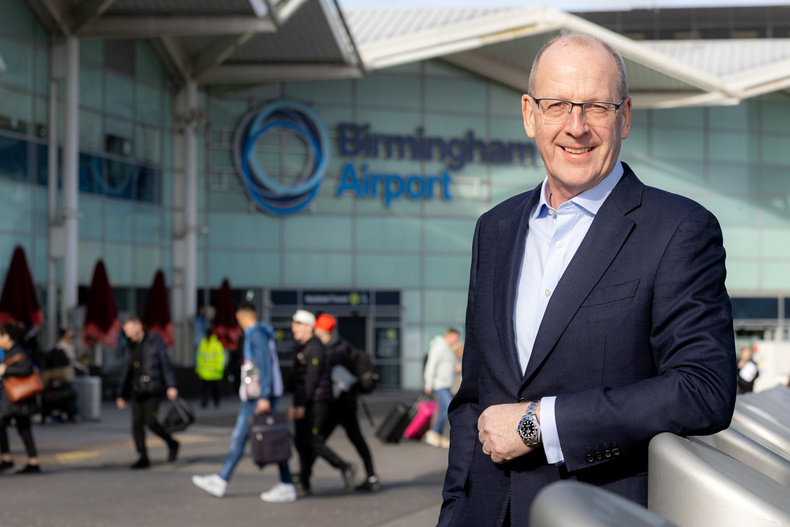
NICK BARTON, chief executive of Birmingham Airport, says that the resumption of air links between Birmingham and New York are the most common request he receives. He tells Chamberlink’s JON GRIFFIN why he is determined to make that happen.
Birmingham Airport CEO Nick Barton has hailed the planned reintroduction of direct flights to New York as a huge economic boost for the West Midlands – with two unnamed airlines potentially in the frame for a return of a daily service to the Big Apple.
Nick told Chamberlink he aimed to fly out to the US for talks with the two airlines as momentum grows for the return of daily services to New York from Birmingham – providing new regional transatlantic links for nearly two million stateside-bound passengers a year.
Airport bosses estimate that Birmingham is currently losing around 1.88 million passengers annually from its wider catchment area – the equivalent of 5,100 passengers a day - because of the lack of a direct service to New York, with flights only available through major European hubs such as Dublin, Amsterdam and Paris.
Now, a recently announced multi-year financial support programme aims to see the airport invest several million dollars to secure direct, daily scheduled services after almost a decade of the region being underserved for travellers to the US.
Hopes of a renewed service to the city that never sleeps followed strong demand and pressure from businesses, regional investors, universities and exporters. The airport aims to resume daily flights from summer 2027 to coincide with the Invictus Games in Birmingham.
Airport CEO Nick Barton told Chamberlink: “Having a direct service, which ran for roughly 20 years or so on a daily basis, was clearly something that people needed and is clearly something we would like back. We know from our statistics how many people fly from our core catchment and from our wider catchment areas every single day.
“At the moment they’re going considerable distances to get those services so having those services here would be a great benefit to them – and the wider economy. We shouldn’t really have lost that service in the first instance in all honesty – the numbers of people flying on a daily basis from here would easily support daily services today, without any question.
“Our industry, whilst it covers the world, is actually quite small. We know who the individuals are and which of the airlines to talk to which have the capability of flying that service. What you have to do is look at is there a business need for it from their perspective as well as ours? Clearly we have a business need and we need to match an airline’s strategy to us.”
He said airlines with the capability to operate a resumption of BHX-New York flights – scrapped at the end of 2017 - numbered very few.
“You’re probably looking at a group of no more than four and in reality, probably two. There’s got to be certain types of aircraft in their fleet that are available or likely to be available, and you’ve got to look at their strategy as to how they operate.
“I haven’t had it confirmed yet but I am hoping to go to the US in a couple of weeks to take time with those two headline airlines that we are looking at to talk about the proposal that we have put out. It’s the right thing to do because we’ve got all the data, we’ve got the case and the airlines are usually pretty warm when you make the effort to go and see them.”
Nick said a resumption of flights to New York was the “most common request” he regularly received, particularly from the business sector – while an estimated 5,000 passengers a day from the wider West Midlands catchment area would benefit.
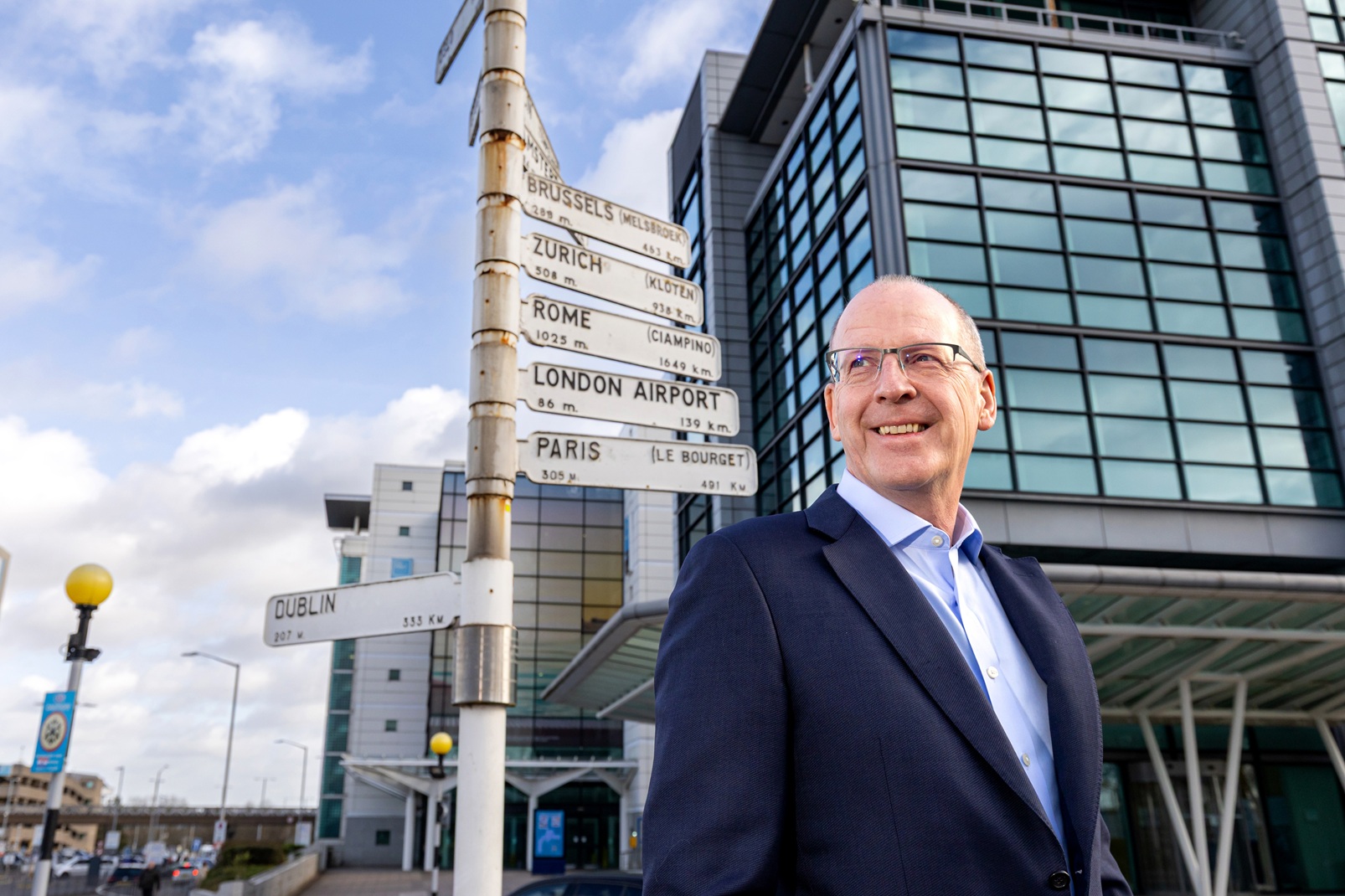
“We know that it’s a very, very important part of what the region wants and therefore we’re focusing on delivering it.
“A lot of it is leisure, a lot of it is visiting friends and relatives and an important part of it will be business. It’s that market – supported by all the others – that has the most impact on this region through having that direct connectivity.
“You can see it from the businesses that are thriving and investing, for example Knighthead in Birmingham City Football Club, and they’re just one of many, many companies. The US is an enormous market.”
He said the business market was a vital part of Birmingham Airport’s customer base – while BHX was a key component of the regional economy. “If you look at this airport as a business we are turning over comfortably over £200m a year, but the economic benefit of this airport is well over one and a half billion. There’s a real multiplier in terms of what we do and also how the region benefits.
“That’s not only for employment creation and the economic benefit of that but it’s also the business connectivity and the business that flow from it – if you imagine a region like this one with all its international businesses, would it have those businesses if you had no access to international markets? The answer is almost certainly very unlikely.
“If we can carry on providing services and growing our coverage - with New York being an important part - then it follows that there’ll be a wider economic benefit that comes from that.”
Since April 2025 the airport – the UK’s seventh largest with 35 airlines operating over 140 direct destinations and 657 onward destinations - has enjoyed its most successful year to date following nine months of consecutive, record-breaking growth.
To keep up with demand, BHX has unveiled its biggest ever capital investment programme which will see £300m invested in every corner of the airport over a four-year period, including next generation security halls, terminal and airfield upgrades, baggage and immigration efficiencies and an increase in food and retail offering.
BHX currently attracts around 13.8 million passengers a year. “The intention is to incrementally grow – maybe not a million a year – but maybe several hundred thousand each year and just keep on building the growth.”
Nick said BHX – launched as a Birmingham City Council-owned airport in May 1939 – stood at a “fantastic” juncture in its long history.
“While some people will roll their eyes a little bit one of the best things heading towards us is HS2. That’s got a really tremendous backstop story for this airport. We’d like to know obviously when it’s going to actually open but the fundamentals of it for this airport are incredible.”
This article first appeared in the March 2026 edition of Chamberlink magazine.