The hidden value in your jewellery box: A guide to reusing gold
Written by Caroline Creba from Caroline Creba Fine Jewellery
One of the things I love most about my work is discovering what people have tucked away in their jewellery boxes.
Sometimes it's an inherited ring that hasn't been worn for years, a broken gold chain or a collection of pieces that no longer suit their owner's style. Often, there's a story attached to each one.
What surprises many of my clients is just how much value these forgotten pieces can hold.
With gold prices having risen significantly in recent years, jewellery that has been sitting unworn in a drawer may now have a greater financial value than its owner realises. And it's not just gold. Platinum and other precious metals are also worth considering.
But the real opportunity isn't necessarily selling your old jewellery. It's understanding what you already own and what you could do with it.
Why rising gold prices matter
Gold is a globally traded commodity, with prices influenced by economic conditions, demand and investor sentiment.
As gold prices rise, so does the underlying metal value of gold jewellery. An inherited wedding ring, an old bracelet or even a single earring whose partner has long since disappeared could all be worth taking another look at.
Platinum also has its own market value, although its price moves independently of gold.
However, there's an important distinction between the gold price you see in the headlines and what your jewellery is actually worth.
The market price typically quoted for gold refers to pure, 24ct gold. Most jewellery, however, is made from alloys containing different proportions of gold and other metals.
For example, 9ct gold contains 37.5 per cent pure gold, while 18ct gold contains 75 per cent. Platinum jewellery is commonly made from 95 per cent platinum.
The weight and purity of a piece influence its intrinsic metal value. Any offer to purchase it will also reflect processing costs and commercial margins.
And that's before considering gemstones, craftsmanship or sentimental significance.
It's why I always encourage people to understand what they have before deciding what to do with it.
Understanding what's in your jewellery box
Hallmarks are a useful starting point. In the UK, these identify the precious metal content of jewellery, with marks such as 375 for 9ct gold, 750 for 18ct gold and 950 for platinum.
Older or un-hallmarked pieces may need further testing.
Gemstones deserve consideration too. Diamonds, sapphires, rubies and emeralds can often be incorporated into new designs, provided their condition and suitability are carefully assessed.
Sometimes, the most valuable part of an inherited piece isn't the metal at all, but a gemstone that could become the centrepiece of something entirely new.
A professional assessment can help establish which elements could be reused, which might benefit from refining and what value could be put towards a new commission.
Can old gold or platinum really become new jewellery?
Absolutely. But there's an important distinction that I always explain to my clients.
Using the value of your old precious metal isn't the same as reusing the actual metal itself.
One option is to exchange unwanted gold or platinum for its scrap value, which can then be credited towards the cost of a new piece of jewellery.
This allows the new design to be manufactured using freshly prepared precious metal while still making use of the financial value of the original pieces.
The alternative is to retain and reuse the actual gold or platinum from a sentimental piece.
For some people, this distinction is incredibly important. Knowing that a new ring contains the very same metal once worn by a parent or grandparent can make it all the more meaningful.
However, it isn't always as straightforward as melting down an old ring.
Jewellery metals are alloys, and older pieces may contain solder, previous repairs or different metal compositions. These can affect how the metal behaves during manufacturing.
Platinum requires particular care. Although it can be reused, we pay close attention to the age and consistency of the original metal, as certain compositions can be more difficult to work with.
We're always transparent with clients about the risks involved, including the possibility that the original metal may fail during manufacture. In some cases, using its scrap value towards new platinum may be the more reliable option.
There's an environmental consideration too. Gold and platinum can be refined and reused without losing their fundamental properties, while existing gemstones can often be given a new life. Although redesigning jewellery still involves energy and specialist manufacturing, making use of precious materials we already own can help reduce the need for newly mined resources.
Ultimately, the right approach depends on the jewellery, the design and, perhaps most importantly, what the original piece means to its owner.
From forgotten jewellery to something extraordinary
One of the most rewarding parts of jewellery redesign is seeing something unworn become a piece that can be enjoyed every day.
What might begin as a collection of mismatched rings, an inherited pendant or a handful of loose gemstones can become something entirely new, while preserving the elements that matter most.
Behind that transformation is a combination of creativity, precision and traditional craftsmanship.
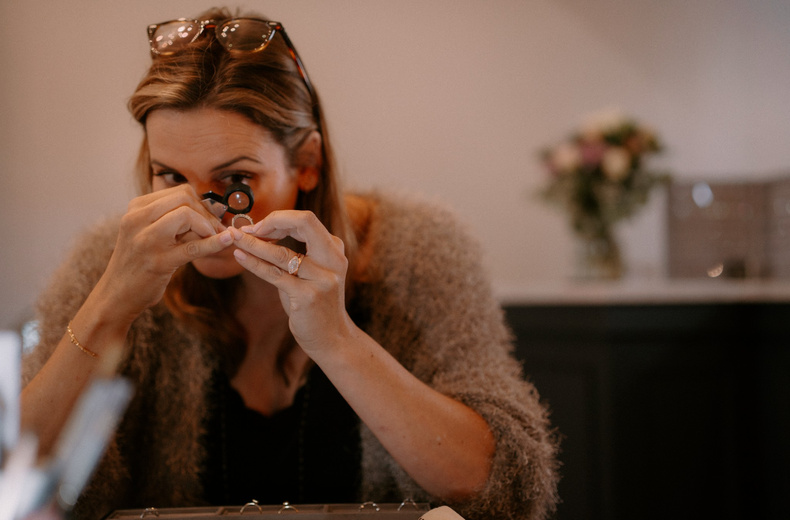
First, the original jewellery is carefully examined. Precious metals are identified, gemstones are assessed and, where appropriate, removed for reuse. It's often at this stage that the possibilities begin to emerge. A diamond from one ring might become the centrepiece of another, while smaller stones could be incorporated into a completely different design.
Once the direction is established, computer-aided design (CAD) allows us to explore the new piece in three dimensions, refining everything from its proportions to the smallest setting detail.
A physical wax or resin model can then be produced, allowing the client to see and try the design before it's made in precious metal. It's often the moment when an idea suddenly feels real.
Then comes the manufacturing
Depending on the design, the piece may be handmade using traditional goldsmithing techniques or produced through casting. In lost-wax casting, a model is used to create a specialist mould, which is then prepared to receive molten precious metal.
When a client wants their original metal incorporated into their new jewellery, it may need to be prepared and processed separately, rather than using metal from a standard manufacturing supply.
That individual approach requires additional handling, time and specialist work, which can increase the manufacturing cost.
It's something I'm always very open about. Reusing the actual metal may cost more than simply applying its scrap value towards newly supplied gold or platinum, but the additional cost isn't necessarily prohibitive.
For someone who wants to know that their new ring contains the very same gold once worn by their mother, father or grandparent, that distinction can be priceless.
Finally, gemstones are carefully set, the metal is refined and polished, and the finished piece undergoes its final checks.
We're incredibly fortunate here in Birmingham to have the historic Jewellery Quarter on our doorstep, where specialist craftspeople continue to combine traditional skills with modern manufacturing technology.
When sentimental value outweighs financial value
I once worked with two sisters who had inherited gold rings from their father.
He had encouraged them to put the gold to good use, but the original rings weren't pieces they would wear themselves.
Rather than leave them tucked away, we transformed the gold into two individual rings, each reflecting the sister's personal style while retaining a connection to their father's jewellery.
Birthstones and engraved initials added further meaning.
The result wasn't simply two new rings. It was a way for both daughters to carry a little of their father's story with them every day.
For me, that's what makes jewellery redesign so special. The materials have a financial value, but the memories attached to them are often worth far more.
Five things to consider before selling old jewellery
Before parting with inherited or unwanted jewellery, I'd encourage you to ask yourself five questions:
1. Do I know what it's made from? Check for hallmarks and seek professional advice if you're unsure.
2. Have I considered the gemstones? They may have potential beyond their immediate resale value.
3. Does it have sentimental significance? Once a piece is sold or its original form is lost, that decision cannot be reversed.
4. Could it become something I'd actually wear? Redesigning an unworn piece may give it an entirely new purpose.
5. Do I understand my options? Compare selling the metal, using its value towards something new and retaining the actual original material. Each approach has different costs and benefits.
A different way of looking at your jewellery box
Rising gold prices have given us another reason to reconsider jewellery we already own.
But before selling an inherited ring or a collection of broken chains, it's worth finding out exactly what you have.
You may discover valuable precious metals, gemstones that deserve a second life or the opportunity to preserve a family story in an entirely new way.
And sometimes, the starting point for something beautiful isn't a trip to a jewellery shop.
It's opening your own jewellery box.
About the author
Caroline Creba is the founder of Caroline Creba Fine Jewellery, an independent bespoke jewellery business based in Knowle, Solihull. With more than 25 years' experience in the jewellery industry, Caroline specialises in bespoke design, engagement rings and heirloom jewellery redesign, working with skilled craftspeople in Birmingham's Jewellery Quarter.
For more information, call 01564 757 234 or email info@carolinecreba.com