
The importance of using metrics that matter
Written by Anthony Murphy from Veritas
Modern management has an irony at its heart: whilst we now have access to far more information about how our organisations are performing than ever before, I am not convinced we have become equally good at understanding what that information is telling us.
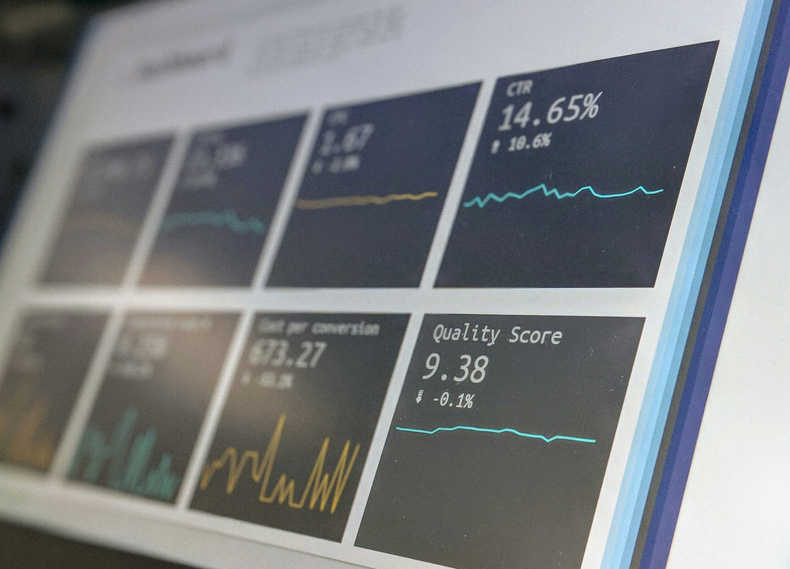
Almost everything can now be measured -we have dashboards, reporting systems, performance indicators and increasingly sophisticated software to present the results.
Board packs are full of charts and management meetings can spend hours reviewing numbers – but I often find myself asking a rather basic question: are we measuring the things that actually matter?
I remember working with an organisation that could tell me, with considerable precision, how long it took to recruit a new employee. It was clearly an important measure to them, and one they monitored closely. What they could not tell me was how many employees they were losing, or why those people were leaving.
That struck me as extraordinary - as they had become very good at measuring how quickly people came through the front door, without giving the same attention to those going out of the back.
Of course, recruitment efficiency matters. Vacancies cost money, delays affect services and good candidates do not remain available indefinitely.
But if an organisation continually replaces people because of poor management, limited progression, or an unhealthy working environment, improving recruitment speed treats a symptom rather than the underlying problem.
The wider evidence suggests this is not an isolated issue. The CIPD reported in 2024 that only 17 per cent of respondents to its 2022 resourcing survey calculated the cost of labour turnover, while just 12 per cent collected data to evaluate and improve retention initiatives.
More recent research also found that many employers still struggle with retention and workforce planning. These are not obscure measures. They go to the heart of an organisation's ability to retain knowledge, maintain service quality and control costs.
On another occasion, I was reviewing performance arrangements with an organisation whose senior team openly acknowledged that its KPIs did not reflect its actual priorities. The measures had developed over time, inherited from previous reporting arrangements and added whenever someone wanted another piece of information.
The problem with KPIs is not that they are inherently wrong, quite the opposite. Good measures are essential, but the difficulty arises when measurement becomes an end in itself.
If something is easy to count, we count it. A system produces a report, so the report becomes part of the monthly pack. A target has been used for years, so it survives long after the circumstances that justified it have changed.
Eventually, organisations can find themselves managing the numbers rather than managing the business.
Take customer service, it is easy to monitor how quickly calls are answered or how many enquiries are resolved - but none of those stas will tell you whether customers received the help they needed.
A team might improve its call-handling statistics while leaving customers frustrated, passing problems elsewhere or encouraging repeat contact. The numbers may look better while the experience becomes worse.
The same principle applies to facilities management, workforce performance, procurement and almost every other business function. We can measure maintenance jobs completed without understanding whether buildings are becoming more reliable.
We can measure procurement savings without recognising the consequences for service quality. We can measure attendance at training without establishing whether anybody is better at their job afterwards.
This is where leadership judgement matters. I would much rather see a smaller number of carefully chosen measures that prompt useful questions than an impressive dashboard that nobody challenges. The purpose of a KPI should be to illuminate performance and support decisions, not simply to demonstrate that somebody is monitoring activity.
That means starting with the organisation's objectives, rather than the data it happens to have available. What are we trying to achieve? What would success genuinely look like? What would warn us that something is going wrong? And, perhaps most importantly, what would we do differently if a particular measure changed?
If nobody can answer that last question, I would question why we're collecting the measure at all.
It also means accepting that not everything important can be reduced to a neat figure. Employee morale, customer confidence, organisational culture and the quality of leadership all matter enormously. They can be assessed and trends identified, but they require conversation, observation, and interpretation as well as data.
One risk of reporting technology is that it can create an impression of certainty where none exists - a number displayed to two decimal places may look authoritative, but precision is not the same as relevance.
I don't believe there should be less accountability or a return to decisions based purely on instinct, but for better accountability - one that connects the evidence we collect to the outcomes we claim to value.
That requires leaders to challenge familiar reports, retire measures that no longer serve a purpose and be willing to hear what the less comfortable data is telling them.
The real test of an organisation's performance framework is not how many KPIs it has, or how attractive its dashboard looks. It is whether the information helps people make better decisions.
We should never confuse the ability to measure something with the wisdom of measuring it.