
The website of the future: Six practical steps for your business
Written by David Whitehouse from inLIFE
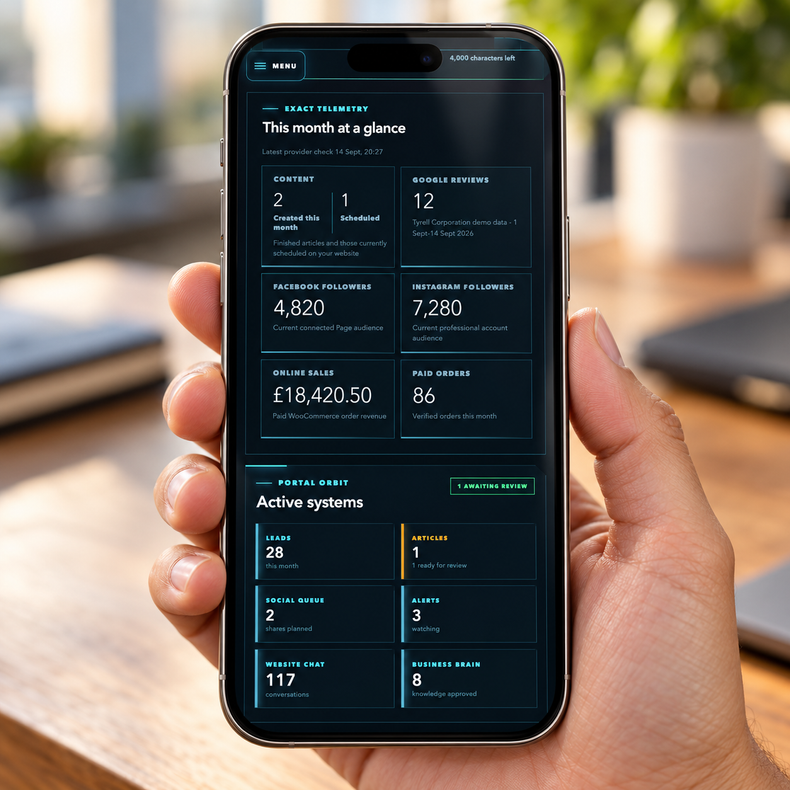
At inLIFE, we pictured a website that could keep its content moving, communicate in a business’s own voice, explain how its marketing was performing, alongside when and how the owner wanted to hear it. That thinking led us to create IRIS, our real-time intelligence system.
The process also raised a wider question: what should businesses expect from their websites as AI becomes part of everyday working life?
A useful starting point is to look at the jobs surrounding a website. Someone must decide what to publish, keep information accurate, review performance and respond to enquiries. These activities need time, knowledge and judgement.
For businesses exploring a more active role for their website, here are six practical areas to consider.
1 Automate content with a clear editorial direction
Content automation should begin with a brief. Before introducing any tool, establish who you want to reach, which services matter most and what questions your customers regularly ask.
Then define your voice. Provide examples of writing that sounds like your business, explain the language you prefer and identify phrases or claims to avoid. A technical consultancy and a family visitor attraction should sound different, even when using similar technology.
Give the system direction as your priorities change. You might want to concentrate on a seasonal service, explain a new offering or address a common misunderstanding.
Within IRIS, this approach connects business knowledge and writing preferences with content preparation and publishing. The broader lesson is that automation works best when someone remains responsible for its direction.
Decide whether articles should require approval or publish automatically. Set a schedule your team can sustain, and use analytics to inform timing where there is enough relevant data. Review the results before assuming a suggested publishing time is the best one.
2 Ask for useful answers from your analytics
Start with a business question before opening a report.
For example: which pages are bringing in enquiries? Which services attract interest but few next steps? Has a recent article helped visitors discover something else on the website?
These questions give reporting a purpose. Website visits alone cannot explain whether your marketing is helping the business.
Connected reporting can make information easier to explore, including through everyday voice or text questions. However, an accessible answer still needs a clear source and reporting period. Compare equivalent dates and distinguish between an enquiry, a qualified opportunity and a completed sale.
Choose how you want to receive information. A weekly overview may suit one business, while another needs a monthly review and occasional alerts. The frequency should support decisions without creating another stream of messages to ignore.
3 Build a reliable source of business knowledge
An AI system needs accurate information about the organisation it represents.
Gather your service descriptions, frequently asked questions, customer profiles, tone of voice and relevant boundaries into an approved knowledge base. In IRIS, we call this the Business Brain.
Assign responsibility for maintaining it. When a service changes, someone should update the underlying information rather than relying on the system to discover the change.
Separate public information from material intended only for your team. A customer-facing feature and a private reporting assistant have different purposes and should have access appropriate to those purposes.
4 Use competitor insight to find unanswered questions
Looking at competitors can reveal useful gaps in your own website.
Focus on what a prospective customer can learn. Does another business explain a process more clearly? Have they covered a concern your customers often raise? Is your own specialist expertise difficult to find?
Use those observations to improve your content plan. Add your own experience, examples and perspective rather than reproducing another company’s articles.
Prioritise topics that connect with your services and customer needs. A gap is worth filling when answering it would help the people you want to reach.
5 Make reviews and alerts actionable
Before setting up an alert, decide what someone should do when it arrives.
A new review might need a considered response. A change in website activity might warrant investigation. A repeated customer question could suggest a missing explanation on a service page.
Give each type of alert an owner and choose a sensible delivery method. Avoid treating every small movement as urgent.
AI can help prepare a review response, but check that it reflects what the customer actually said. Personal attention matters most when someone has raised a concern.
6 Add website conversations where they help
Website chat is an established tool. Its usefulness depends on the quality of its answers and the next step it offers.
Build it around questions customers genuinely ask. Test whether it explains your services accurately, recognises when it lacks information and makes contacting a person straightforward.
If it captures an enquiry, ask only for the details needed and explain how they will be used. Review conversations periodically to identify confusing pages or recurring information gaps.
Businesses can introduce these capabilities gradually. Choose one task, record how it works today and agree what improvement would look like. Test with real examples, review the results and expand when the benefit is clear.
That gives the website of the future a practical foundation: accurate knowledge, useful automation and people who remain responsible for its direction.
David Whitehouse is managing director of inLIFE, a website and digital marketing business based in Burntwood, Staffordshire, and the team behind IRIS.