What happens when a town treats culture as essential, not extra?
On any given morning, The Hub in Lichfield looks unremarkable in the best possible way.
A parent with a pram. Someone popping in from work. Older residents staying warm over lunch. Later, a soundcheck. Later still, a full house.
This is not incidental. It is the outcome of a deliberate belief that culture is not something a town adds once it is successful, but something it builds from.
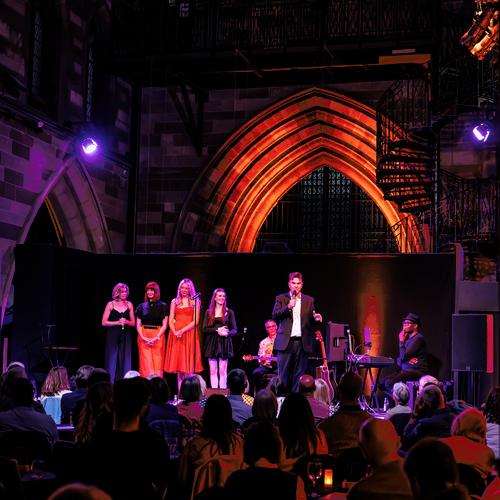
There is a café, a gallery and a rolling programme of performances, all located inside St Mary’s Church – transforming the old building into a thriving civic and cultural space.
But the Hub is not built around any single function. Its purpose is defined instead by who uses it, and how often.
This ethos was embedded from the outset when it was first opened in 2018.
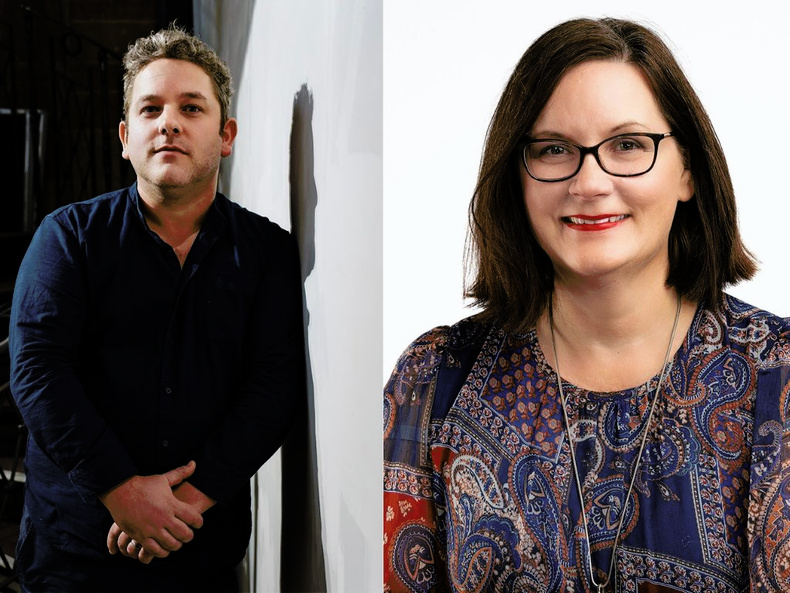
As The Hub’s artistic director Anthony Evans says: “From the moment the Hub opened, we believed it had to reflect its community.
“We were fortunate to take on an existing, ageing building that could easily have fallen into disrepair. Instead of building something new, we transformed it into a thriving cultural space at the heart of the town.”
“The Hub is a model other towns and cities should be looking at. Disused buildings, particularly churches, can be reimagined as cultural anchors rather than left to decline.”
This level of streamlined thinking has brought around many advantages to Lichfield, including a renewed sense of confidence in what the city can offer.
Acts that once required a trip to Birmingham, Manchester or London are now drawing audiences into the city itself, changing patterns of movement and expectation.
With that shift has come a subtle but important demographic change: more families choosing to stay, younger people finding reasons to return, and creative professionals maintaining a connection to the city even as their work takes them further afield.
Studies have also unveiled many advantages of actively engaging in arts and crafts including higher levels of wellbeing and social connectedness, and lower odds of intense social loneliness, compared with those who engage less.
Though firmly rooted in its community, the Hub now operates on a national footing, its ambition and identity helping to retain talent and reinforce Lichfield’s position as a place where culture is not imported occasionally but lived year-round.
In 2025, the Hub hosted over 150 shows including live music, comedy, theatre, film and family shows as well as a full calendar of exhibitions, over 200 community meet-ups and private party hires.
As Anthony explains: “Culture should be seen as the foundation of a successful town, not something extra.
“When we hosted two sold-out nights of iconic goth music, around 250 people came into town from elsewhere. They stayed, ate, drank and contributed to the local economy.”
“That kind of programming brings people who wouldn’t otherwise visit.”
Yet much of what the Hub now offers exists in spite of how cultural spaces are funded, rather than because of it.
The Hub has sustained itself through ticket sales, sponsorships, grants and government "levelling up" funding via Lichfield District Council to support community engagement work.
The ticket sales also includes the payroll of around 22 staff members alongside a specialist community engagement officer.
While this system has worked so far, it has limited the organisation’s ability to plan beyond short funding cycles.
For CEO Louise Fleming, this is another hopeful, yet distant dream: “In an ideal world, there would be a larger pot of money for culture-led placemaking and, crucially, long-term funding.
“Multi-year funding gives security and allows proper planning. Our current three-year grant via LDC has been transformative, but uncertainty returns when it ends.”
“We don’t want to constantly invent projects just to access funding. We need support for the core work we do every day.”
This is seconded by Anthony: “Long-term funding allows cultural organisations to join the dots.
“With security, we can build a coherent cultural offer that links venues, festivals and heritage.
“That alignment only happens when leadership and funding reflect what’s happening on the ground.”
Among the many potential opportunities from devolution of further power to regional authorities, there are some concerns about what this transition might entail for businesses like The Hub, which relies on strong relationships with the existing local authorities.
Louise says: “My biggest concern with devolution is losing the close relationships we currently have with local councils. Those relationships have taken years to build.”
“If decision-making moves too far away, there’s a risk of losing understanding of what we are trying to achieve locally.”
“The Hub reflects its community. If power moves away from that community, there’s a real danger of disconnect.”
The Hub already stands as proof of what can be achieved when cultural ambition is rooted in place. With the correct fundings in place, it also has the potential of being an inspiring example of how a town treats culture as an essential entity.
Louise and Anthony are keen to see clearer answers around further funding devolution, including the potential to raise funds via a tourist tax.
At its core, the question is not simply how culture is funded, but how closely decision-making remains connected to the communities it serves.
Louise concludes: “We are an anchor in the community. We bring together businesses, residents and local government.”
“There are very few spaces that genuinely do that. The Hub does.”
The Staffordshire Gateway Growth Panel, convened by the Greater Birmingham Chambers of Commerce is currently preparing a roadmap for unleashing the potential of Staffordshire Gateway businesses. The report will be launched on Friday, March 27 at The Hub at St Mary's.