Addressing the ‘women in HR’ stereotype: Karen Robinson

As part of International Women’s Day 2026, leaders in Greater Birmingham share their thoughts on the power of reciprocity and support following this year’s theme of ‘Give to Gain’.
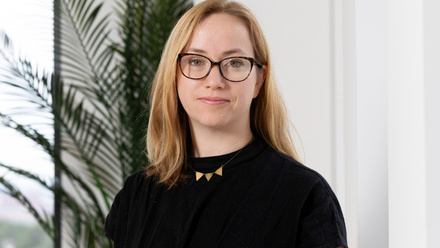
Karen Robinson is a HR consultant and business leader coach.
Karen says that throughout her career, she has encountered an outdated stereotype of women who work in HR.
Since then, she has made it her mission to address that stereotype through the power of education and by demonstrating the value HR brings to a business.
What changes would you like to see for women in business in Greater Birmingham?
More flexibility for mums and caregivers without determent to their career.
Although some businesses can be flexible, there are still many who believe a woman can't be a mum or caregiver and have a career.
Many positions are advertised as full time and office based, and many part time ones are still four days a week.
I believe this calls for changes to the way that employers view work - such as measuring their team on output and impact rather than the hours they are sat behind a computer.
Looking at the variety of flexible possibilities available, it's not just working from home and part time, there are early/late starts and finishes, TOIL, working hours spread over several weeks, and job share amongst others.
It's also about supporting mums in their return to work, because their skills and experience don't suddenly vanish after bringing a baby into the world.
It's about providing support and guidance when they first come back to work, discussing their career aspirations and how the business can work with them to achieve that; making female role models more visible, such as showcasing their achievements and giving the opportunity and training to mentor and coach others; normalising Dad's taking time out whether that's through shared parental leave or the more day to day care requirements.
Managing culture change and promoting women into decision makers.
Many businesses are still run with traditional leadership of constant visibility, control, and hierarchical dominance.
Yet studies show that women-led businesses often have better risk management, innovation, and collaboration.
Businesses need to start looking at offering women mentoring and coaching, clear progression pathways, and succession planning, but also acknowledging the skills, experience and strengths that women bring to a business, such as empathy, compassion and a strategic, people focused mindset.
Although there are many laws in place to protect women, I do still feel there is a stigma around calling people’s behaviour out and holding people accountable.
It's simply too easy and comfortable to tolerate, ignore and brush concerns under the carpet than deal with issues head on.
Leaders need to be promoting a respectful and safe culture from the top and holding those who choose not to adhere, accountable.
When people feel safe and valued at work, they perform so much better, ultimately leading to the success of the business.
What is one action you could take to challenge gender bias or stereotypes?
As with most things, a business’ culture is what behaviour the leadership is prepared to tolerate.
Businesses are led from the top down, so if leaders are gender-biased and stereotypical then so will be their decisions.
I believe all people in a leadership role should go through robust equality, diversity and inclusion training that not only covers discrimination, stereotypes, and unconscious bias, but also psychological safety, allyship, how to call out poor behaviour when you see it and having difficult conversations in order to hold people accountable.
But the training has to be meaningful, not a one-off, tick in the box exercise.
Leaders should be taught how to bring this new knowledge into everyday meetings and other interactions.
There needs to be regular follow-ups and refreshers so that it becomes a natural mindset.
What is the biggest challenge you have faced as a woman in business and how did you overcome it?
One of the biggest challenges I have come across is the stereotype of a woman working in HR.
We are either the evil, fun police who you only see when you are in trouble, or the pink and fluffy, tea and Tampax brigade, who deal with the 'emotional' people and organise the Christmas party (I always thought the fun police organising the Christmas party was quite ironic!).
Sometimes it was personal and sometimes it was a generalisation.
More often than not, it was a traditional view of Personnel, the hirers and firers of old.
People just assumed that because I was a woman in HR that I knew nothing of how business “really” worked.
What I realised as I grew and developed was that it was more about education.
People genuinely didn't understand the value that HR brings to a business.
They don't see the battles behind the scenes, cutting costs instead of jobs, minimising the financial and reputational risk to the business because of poor decisions and behaviour.
The hard work that goes into the wellbeing initiatives and the competitive benefits packages, the difficult decisions that are for the greater good, the terminally ill employee hospital visits, recognition for a job well done and when a senior leader needs a supportive and confidential ear.
So that’s what I did. I educated leaders and teams alike, not just on the value that HR brings to a business, but how we understand people - our greatest, but also most complex asset.
I used my love for continuous personal development and learning to introduced new concepts, such as emotional intelligence and the benefits of coaching, new techniques and questioning strategies for interviewing, supporting managers who avoided the hard conversations and a shop floor employee who felt they had no future, become an unstoppable production manager.
I challenged attitudes and behaviour that were not in keeping with the company values, I fought for people who couldn't fight for themselves and ensured that I contributed, even when it wasn't welcomed.
I also invested in a coach to help me develop, build my confidence and understand that the people trying to hold me back were in fact nursing their own insecurities.
Let me tell you, having cheer leaders in your corner does wonders for your self-esteem!
To be honest, I still have the odd person who speaks to me like I'm a little girl, but thankfully they are few and far between, and now I'm self-employed I also get to choose who I work with.
I'm humble enough to know I'm not the finished article and firmly believe we never are.
What I've learnt is that not everyone will be on board because they carry traditional values and beliefs. But for those who want their business to succeed, HR will be their right hand woman.
This year’s IWD theme is Give to Gain. How will you give back to either your organisation or community to help drive more change?
I am a great believer that happy people are productive people.
A business’ greatest asset is its people, and when those people feel like they belong, are valued, listened to and are safe to speak up without recrimination, they become emotionally connected to a business and will go above and beyond so that that business succeeds.
As a HR professional I have seen the results when businesses treat their people as numbers, compared to businesses who genuinely care about their people.
The businesses who look after their teams are the ones with healthier bottom lines, customer experiences and are ultimately, more successful.
Many businesses believe that employee engagement is expensive, but this really isn't the case.
I help businesses to understand the importance of an engaged workforce and the ROI it can have.
Initiatives can include things as simple as an employee survey or forum, training line managers on emotional intelligence and how to have difficult conversations, ensuring that leadership are seen as approachable and making good on their promises.
Having work as a nice place to be isn't just about delivering more, though.
It also covers mental health and wellbeing, meaning absence levels are low.
Because people want to be there, people turnover is low. Because people are allowed autonomy and personal development innovation increases. Because people are allowed to feel like they can be themselves you become an employer of choice and are able to attract the best candidates.
This then spills out into the community. Not just a community feel at work where everyone is in it together, but the wider community benefits from a great local employer, other local businesses benefit from this success and so do the individual families.
I am on a personal mission to improve our work lives, through education and engagement initiatives that support the individual, the business and the community.
By working with business leaders through blogs, workshops, one to one and group coaching and project work, helping them to understand the key to a happy workforce and ultimately a successful business.
If we want real change, we have to put actions behind our words. For me this gives back to so many, not just the individual.
What’s one piece of advice you would give to women looking to succeed in your industry?
My one piece of advice would be “don't take criticism from someone, you wouldn't go to for advice.”
I find that people can often be quite quick to criticise, but it is nearly always more about them than it is about you.
Some will criticise because something isn't perfect, yet whenever is it?
Others will criticise because they have their own insecurities and are deflecting onto you.
Some criticise through fear and jealousy because you have the confidence or something material that they don't or the see you as a threat.
To look at it from the perspective, how do you chose someone to go to for advice?
They are often confident, knowledgeable around that particular subject, want to help, have your best interests at heart and if they do have feedback, it is delivered constructively.
How has being part of GBCC helped support your business or career?
Being in the GBCC has allowed me to meet, and get to know, a completely new group of people.
I am very much a people person and working for yourself can be quite lonely, but there are so many networking, workshops and training events. I go to as many as I can and always see friendly and familiar faces.
I don't know anyone in my circle of friends or family who run their own business and so found it difficult to discuss my ideas, thoughts, feelings and concerns with them.
But the people I have met through GBCC get it. They have been there and done it, they have offered helpful advice or a listening supportive ear, they point you in directions that you didn't even know existed and are happy to refer you to people who they know.
I have learnt so much about how to run a business, increased my skillset, boosted my profile and been able to share my experiences with and support others.