Brum continues to build and believe in its future – Chamber chief

There’s a moment in every good “what if?” story where the future hangs on a handful of decisions, writes Henrietta Brealey.
The door opens, walk through and history takes one path. Miss the moment, and everything changes.
It’s hard not to wonder whether Birmingham is approaching one of those moments.
For much of the past few years, the city has found itself in the headlines for reasons none of us would have chosen - council finances, industrial disputes and endless debate about what Birmingham is getting wrong.
At times, the narrative around the UK’s second city has felt disconnected from the reality experienced by the businesses, investors and entrepreneurs continuing to choose Birmingham as a place to invest and grow.
Yet beneath the noise, something important is happening.
A serious national conversation has reopened about where power sits in the UK and whether the country can continue to rely on an economic model centred overwhelmingly on London.
Andy Burnham’s proposals for deeper devolution and a ‘No.10 North’ have reignited that debate. Whatever your view of the politics, the underlying question matters enormously to Birmingham: who gets to shape the future of Britain’s economy?
Today’s political slogan may be Manchesterism, but if this agenda is to succeed, the result cannot simply be a stronger Manchester. It must mean meaningful devolution, investment and decision-making power across the UK’s major regional economies.
And there is no credible route to national growth that bypasses Birmingham.
Birmingham is home to almost 1.2 million people, double the size of Manchester. The wider West Midlands Combined Authority area has more than three million residents and is predicted to grow by the size of Leicester by 2043. This is not just another regional centre; it is critical national infrastructure.
The scale of the opportunity is enormous. The Birmingham East Mayoral Development Corporation zone alone represents £11 billion of regeneration opportunities. The city sits at the heart of the UK’s transport networks, is home to world-class universities and regularly tops the regional charts for FDI and inward investment, attracting projects across advanced manufacturing, life sciences, digital technology and professional services.
HS2 will further add to these strategic advantages by significantly enhancing connectivity to the capital.
The city sits at the heart of the UK’s transport networks, is home to world-class universities and regularly tops the regional charts for FDI and inward investment, attracting projects across advanced manufacturing, life sciences, digital technology and professional services.
I’ve heard many business leaders in recent weeks questioning whether Manchesterism is a risk for Birmingham and the West Midlands.
To me, it’s an opportunity for our region – the risk sits with Labour and the (inevitable) Burnham government. They know that they have to show that they’re in it for the whole of the UK, not just the future PM’s hometown, if they want to win the next election.
And if Andy Burnham wants to prove he has found the formula for accelerating regional growth, there is arguably no bigger or better testbed than Birmingham.
The West Midlands is already well along the journey. Successive devolution deals, the West Midlands Combined Authority and our directly elected Mayor have established important foundations. We already exercise significant responsibilities around transport, skills, housing and regeneration.
Look at the transformational plans around the Sports Quarter, the investment flowing into Birmingham city centre and the infrastructure programmes reshaping the wider region.
Investors continue to back Birmingham because they can see what many media commentators miss - a strategically located city packed with talent and significant untapped potential. If the incoming Burnham government need to show results quickly (and they do) there’s no better place to start.
But of course, potential alone is not enough. The substance of this latest devolution debate matters.
A ‘No.10 North’ may be an eye-catching symbol, but businesses will judge success by outcomes, not optics. Real devolution means the ability to make decisions locally, backed by long-term funding certainty and powers that enable places to deliver.
It means faster housing and regeneration projects, better transport connectivity, stronger skills provision and more responsive business support. It cannot simply mean relocating civil servants from one city to another.
The West Midlands must be at the heart of this conversation, not watching from the sidelines but co-designing the next phase of the UK’s economic model.
The timing matters too.
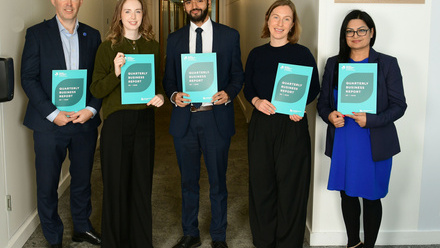
While Greater Birmingham businesses continue to show resilience, global uncertainty is beginning to bite. Our latest Quarterly Business Report showed improving domestic demand, growing confidence and easing recruitment pressures, but weakening export performance and rising uncertainty in international markets. Businesses remain ambitious, but they need the right conditions to invest, trade and grow.
While much of what happens internationally is beyond our control, there is huge opportunity in fixing the wiring at home. Deeper devolution, done properly, could help provide exactly those conditions.
What gives me hope is that Birmingham increasingly feels like a city tentatively rediscovering its confidence. Maybe it’s the sunshine or maybe it’s the excitement that comes with a packed summer of sport and culture.
These moments tell a different story about Birmingham: one of creativity, innovation, resilience and ambition. A city that continues to attract talent, build and believe in its future. For those who want to support championing this Birmingham, be sure to join us at the next Brumbassadors meet-up.
The challenge now is whether our political and civic leaders can match those opportunities and optimism with delivery. And there’s no man facing more pressure to match slogans with success than Andy Burnham.
If they can, we may look back on this period as the moment Birmingham and the West Midlands stopped talking about its potential and started fully realising it.
Sliding doors moments are only obvious in hindsight, but this certainly feels like one. Are we ready to seize the moment?
Henrietta Brealey is CEO of Greater Birmingham Chambers of Commerce
This column first appeared in the Birmingham Post