Firms nervous about hiring amid labour cost challenges - Chamber

Businesses across the West Midlands are less confident about hiring due to “sky-high” labour costs, business leaders said today.
While the latest Office for National Statistics (ONS) labour market data reveals unemployment across the West Midlands fell by 0.2 per cent in the August to October period, the region still has the third highest jobless rate in the UK.
Over the past 12 months, unemployment in the region has risen by 1.5 per cent – almost double the rate of the national average.
Although the regional employment rate increased by 0.2 per cent from August to October, there was a decline of 0.3 per cent over the year.
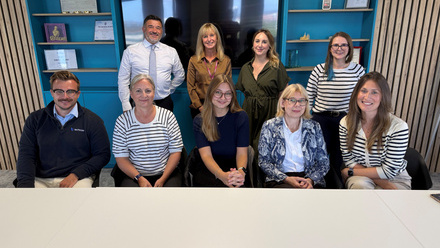
Emily Stubbs (pictured), head of policy at Greater Birmingham Chambers of Commerce, said: “The latest data indicates that the West Midlands currently has the third highest unemployment rate in the country, with unemployment figures rising at almost double the rate of the national average.
“Unfortunately, it reflects what businesses have been telling us – that they are less confident about hiring staff due to sky-high employment costs and a tidal wave of new employment legislation coming down the track.
“We also cannot ignore short‑term, localised factors. The JLR cyberattack and the region’s concentrated automotive supply chain may have contributed to temporary disruption in August–October, with widespread production pauses and knock‑on effects along supplier networks.”
Meanwhile, average wage growth was 4.6 per cent, excluding bonuses, between August and October 2025, according to the ONS.
Earnings growth in private companies slowed from 4.2 per cent to 3.9 per cent but accelerated for the public sector employees from 6.6 per cent to 7.6 per cent, compared with the prior three-month period.
Wage growth, excluding bonuses, still remains higher than the rate of price increases in the economy.
Estimates for employees on company payrolls dropped by 149,000, or 0.5 per cent, in October compared with the previous year.
Emily Stubbs added: “While there has been some easing of cost pressures - with average earnings including bonuses slowing to 4.7 per cent in the three months to October - labour costs remain a persistent challenge.
“Our latest surveying found that labour costs continue to dominate as the biggest cost pressure firms are facing.
“There is a limit to how much additional cost firms can absorb without an impact on investment and growth, and the long-awaited Autumn Budget did little to cut costs or inspire confidence for the year ahead.
“Stakeholders across the West Midlands must accelerate practical solutions on skills, health‑related inactivity, and transport connectivity so local talent can access opportunities and progress.
“Nationally, we need a laser‑like focus on growth, investment, trade, innovation and skills, with Government working in genuine partnership with business to make 2026 a year of delivery.”