Levelling the playing field: Sharon McCormick
As part of International Women’s Day 2026, leaders in Greater Birmingham share their thoughts on the power of reciprocity and support following this year’s theme of ‘Give to Gain’.
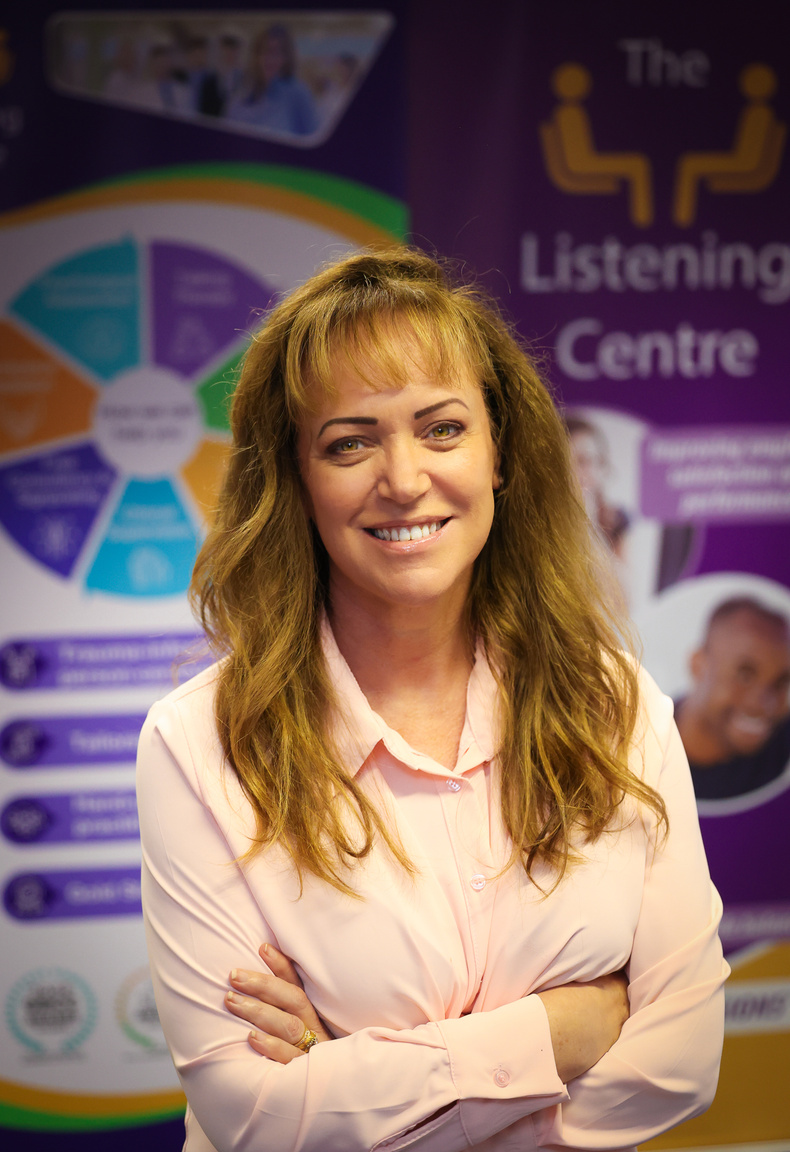
Sharon McCormick, clinical director of The Listening Centre, is an ex-RAF veteran, a business owner, a counsellor, a policy contributor, and Greater Birmingham Chambers of Commerce Business of the Year winner in 2025.
She talks about how she embedded giving back to her business foundations while normalising breaking the mould.
What changes would you like to see for women in business in Birmingham?:
Women-led SMEs in Birmingham are disproportionately building high-quality, values-driven businesses - and then losing contracts to larger providers with inferior outcomes, simply because evaluation criteria favour scale over evidence.
I've experienced this firsthand.
The Listening Centre outperforms national EAP providers on every measurable metric - 6-day response versus an 8.8-day industry average, 5 per cent dropout versus 16-27 per cent sector standard, 2 per cent missed appointment rate versus 10 per cent industry average, 99 per cent employee satisfaction - yet we've lost tenders to corporate providers whose track records don't come close.
When procurement defaults to "safe" national contracts, it doesn't just disadvantage women-led businesses. It delivers worse outcomes for employees, extracts profit from local economies, and rewards size over substance.
Birmingham has incredible women building extraordinary businesses. What we need is evaluation frameworks that ask: what does the evidence actually show? Not: how big is your organisation?
Level the playing field, and women-led businesses won't just compete - they'll lead.
What is one action you could take to challenge gender bias or stereotypes?:
Normalise women in authority who don't fit the expected mould.
I'm an ex-RAF veteran, a business owner, a counsellor, and a policy contributor - and I deliberately show up as all of those things simultaneously, without softening any of them to appear more palatable.
The bias I challenge most is the unspoken expectation that professional women should choose: be warm or be credible. Be ambitious or be likeable. Lead or be humble.
My answer is refusing that choice entirely.
When I narrated best practice for BBC Radio 4, contributed evidence to national policy, and won Business of the Year - whilst simultaneously volunteering with NSPCC and supporting veterans - I was demonstrating that these things aren't contradictions. They're complementary.
The most powerful thing any woman in business can do is be visibly, unapologetically whole.
What is the biggest challenge you have faced as a woman in business and how did you overcome it?
I joined the RAF at 17.
I was one of very few women in a world built by men, for men - where credibility was assumed for some and had to be earned, repeatedly, by others.
I learned early that competence alone wasn't enough. I had to be more prepared, more measured, and more evidenced than my male counterparts just to be heard in the same room.
I carried that lesson into business - and it became my greatest asset.
When I founded The Listening Centre, I was a woman, a mother, and a counsellor entering a corporate procurement landscape that trusted size over substance.
So I built the evidence. Twenty-four years of outcome data, measurable performance metrics that outperform the industry, and a track record that speaks before I walk through the door.
The challenge never fully disappears. But it sharpened me.
I stopped trying to be credible by other people's definitions and started building something undeniable instead.
Per Ardua ad Astra. Through adversity to the stars.
This year’s IWD theme is Give to Gain. How will you give back to either your organisation or community to help drive more change?
Giving back isn't something I schedule around my business. It's the foundation it's built on.
For 14 years I've volunteered with NSPCC, reaching over 900 children across Midlands schools in 2025 alone - teaching them to speak out and stay safe.
I support veterans at the National Memorial Arboretum and co-administer Lichfield's Armed Forces & Veterans Breakfast Club, because I know from my own RAF service that transition is hard and peer recognition matters.
Through Adept Central, my not-for-profit counselling training centre, I'm creating 11 newly qualified counsellors bi-annually - each one entering communities that desperately need affordable mental health support.
Looking ahead, I'm contributing evidence directly to the Commission for the Future of Counselling and Psychotherapy - shaping national policy that will affect how millions of employees access mental health support across the UK.
But the giving I'm most proud of is quieter than any of that.
It's the client who says their life has been saved, the graduate who messages to say their life has changed. The veteran who finally asked for help. The child who learned they have a voice.
These gains are not in any business plan - and they're the only ones that really counts.
What’s one piece of advice you would give to women looking to succeed in your industry?
Stop trying to beat the big players at their own game.
When I founded The Listening Centre, I was a one-woman operation entering a sector dominated by national corporates with marketing budgets I couldn't dream of.
I couldn't out-spend them or out-scale them. So I focused on what they couldn't replicate: genuine relationships, measurable outcomes, and an absolute refusal to cut corners.
Twenty-four years later, my client retention rate is 96 per cent. My outcomes outperform the industry on every measurable metric. The BBC cited my approach as the 'gold standard'. And I've never once tried to be something I'm not.
The women I see struggling in this industry are often exhausted from competing on terms that were never designed with them in mind - chasing scale, suppressing instinct, softening edges to fit frameworks built by others.
My advice is simple: decide what you stand for, build the evidence that proves it works, and then refuse to apologise for either.
Your difference isn't your weakness. In a sector full of sameness, it's the only thing that will make you genuinely unbeatable.
How has being part of GBCC helped support your business or career? :
Recognition from an organisation you respect changes something.
Winning Business of the Year 2025 and Excellence in Customer Service through Greater Birmingham Chambers wasn't just validation - it was a turning point in how seriously the wider business community engaged with what we do.
Mental health provision is still viewed by some as a soft business investment.
Having GBCC's recognition behind The Listening Centre's name opened doors that credentials and outcome data alone sometimes couldn't - conversations with commissioners, invitations to contribute to national policy, and a Pioneer shortlist in 2026 that I genuinely didn't anticipate.
What strikes me most is that the Chamber recognised a small, ethical, values-led business over providers with far greater resources. That matters. It signals to every woman building something meaningful on a modest budget that substance is seen here.
That's not a small thing. For businesses like mine, it's everything.