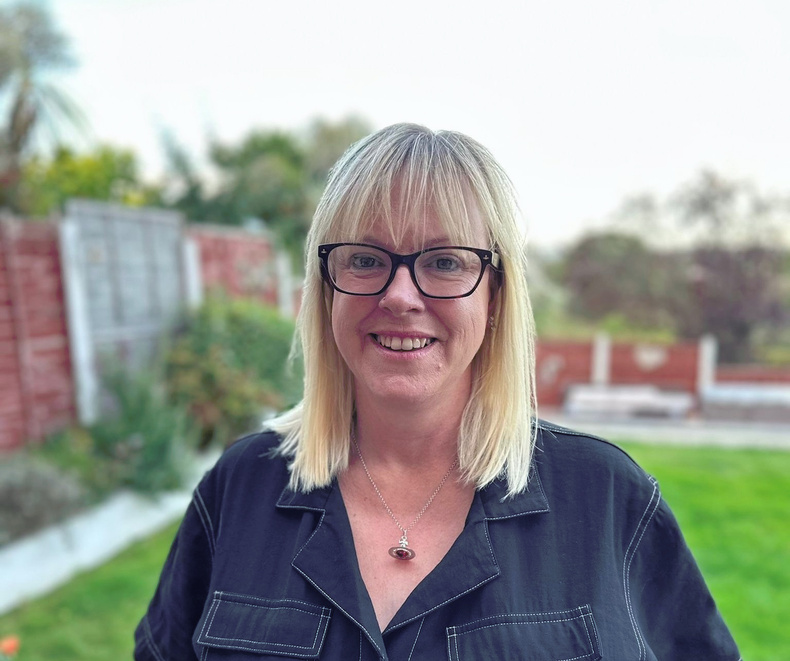
Why it’s time to redesign the system: Liz Crutchley
As part of International Women’s Day 2026, leaders in Greater Birmingham share their thoughts on the power of reciprocity and support following this year’s theme of ‘Give to Gain’.
Liz Crutchley is the CEO and founder of Orange Orchid, a diversity, equity and inclusion consultancy based in Kidderminster.
Liz feels women in business are still being encouraged to adapt to a system that wasn’t designed for them.
It’s time, she says, for a rethink…
What changes would you like to see for women in business in Greater Birmingham?
I would like to see Birmingham move from celebrating individual success stories to redesigning the system so more women can thrive sustainably in business.
First, access to opportunity. That means clearer, more transparent procurement routes into large corporates, anchor institutions and public sector contracts.
Many women-led businesses are capable but not always well connected into decision-makers.
Creating structured pathways, supplier development programmes and better visibility of upcoming opportunities would make a real difference.
Second, access to capital and investment readiness support.
Women are still underrepresented in high-growth funding conversations.
We need more investor networks in Birmingham actively seeking women-led ventures, alongside practical support that demystifies funding and builds confidence in pitching and scaling.
Third, childcare and flexible infrastructure. If we want more women to start and grow businesses, the city needs affordable childcare, flexible workspace models and networks that operate at times that reflect real lives, not just traditional business hours.
Fourth, stronger peer networks that go beyond surface-level networking. Curated communities where women can share challenges honestly, collaborate, and refer work to one another would strengthen the whole ecosystem. Not just inspiration, but commercial traction.
Finally, more visible allyship from male leaders. This is not a women-only issue. When senior leaders in Birmingham actively sponsor, not just mentor, women in business, we see faster and more meaningful change.
Birmingham has huge talent and ambition. With more intentional infrastructure, investment and sponsorship, we can make it a city where women in business do not just survive, but scale, lead and shape the economy.
What is one action you could take to challenge gender bias or stereotypes?
For a long time, women have been encouraged to adapt - to be more confident but not too confident, more assertive but still likeable, more visible but not “too much.”
In other words, to reshape themselves to fit systems that were not originally designed with them in mind.
I think it is time we shift the focus.
Rather than asking women to keep adjusting their behaviour, we should be questioning the structures, expectations and norms that define what “professional,” “leader,” or “credible” look like.
If success requires constant self-editing, the system needs attention.
The action I can take is to challenge those default settings - in hiring, in leadership development, in who gets heard in meetings, and in how performance is assessed.
Not by being confrontational, but by being intentional. By asking different questions. By widening the criteria. By designing environments where more than one leadership style can thrive.
Real progress will not come from women working harder to fit in.
It will come from redesigning the system so that more people can belong and succeed as they are.
What is the biggest challenge you have faced as a woman in business and how did you overcome it?
The biggest challenge I’ve faced is navigating a system that wasn’t built for women.
From subtle biases in who gets opportunities, to expectations about how I should behave or present myself, I’ve often found that success required me to constantly adapt to fit a model that didn’t reflect my strengths or style.
I overcame it by shifting my focus from trying to fit in to creating change around me. I sought out allies, built networks of women and supportive leaders, and deliberately put myself forward for opportunities that aligned with my vision.
Most importantly, I started challenging the norms themselves - asking why certain decisions were made, speaking up when processes were unfair, and designing solutions that work for everyone, not just those who fit the traditional mould.
It’s not about changing myself anymore; it’s about changing the system.
This year’s IWD theme is Give to Gain. How will you give back to either your organisation or community to help drive more change?
This year, I’m giving back through The Pause Powerhouse, an initiative that grew out of a group of women entrepreneurs involved in The Pause, a horror-comedy short film about the menopause.
That project sparked conversations about creativity, leadership, and the unique challenges women face in business - and it showed the power of women supporting each other to take bold, visible action.
The Pause Powerhouse builds on that energy. It provides space, tools, and practical support for women and underrepresented leaders to pause, reflect, and act with confidence.
Through workshops, mentoring, and community events, we help participants reconnect with their creativity, gain clarity, and access networks and opportunities that might otherwise be closed to them.
By turning the inspiration from The Pause into a structured programme of support, we’re giving back to the community in a way that creates ripple effects: women gain confidence and capability, and the wider business ecosystem benefits as more voices are able to lead and contribute.
It’s about transforming conversation into action.
What’s one piece of advice you would give to women looking to succeed in your industry?
Stop trying to fit into a system that wasn’t designed for you. Success isn’t about moulding yourself to what’s already there - it’s about identifying what the system expects, spotting where it doesn’t work, and finding ways to create space for your strengths.
Build your network, seek out mentors and allies, and don’t be afraid to take bold steps that others might see as unconventional. The women who change the game aren’t just adapting - they’re disrupting, designing, and leading on their own terms.
How has being part of GBCC helped support your business or career?
Since joining GBCC a few months ago, the biggest benefit has been access to a broader network of local businesses and leaders.
Even in a short time, it’s highlighted opportunities to connect, share experiences, and explore potential collaborations.
I’m looking forward to leveraging these connections more actively as I grow my business and develop new initiatives, especially those that create space for women and underrepresented leaders to thrive.